Types by transported substance
For oil or natural gas
There is some argument as to when the first real oil pipeline was constructed. Some say pipeline transport was pioneered by Vladimir Shukhov and the Branobel company in the late 19th century. Others say oil pipelines originated when the Oil Transport Association first constructed a 2-inch (51 mm) wrought iron pipeline over a 6-mile (9.7 km) track from an oil field in Pennsylvania to a rail road station in Oil Creek, in the 1860s. Regardless of this, pipelines are generally the most economical way to transport large quantities of oil or natural gas over land. Compared to railroad, they have lower cost per unit and also higher capacity. Although pipelines can be built under the sea, that process is economically and technically demanding, so the majority of oil at sea is transported by tanker ships.
Oil pipelines are made from steel or plastic tubes with inner diameter typically from 10 to 120 cm (about 4 to 48 inches). Most pipelines are buried at a typical depth of about 1 - 2 metres (about 3 to 6 feet). The oil is kept in motion by pump stations along the pipeline, and usually flows at speed of about 1 to 6 m/s. Multi-product pipelines are used to transport two or more different products in sequence in the same pipeline. Usually in multi-product pipelines there is no physical separation between the different products. Some mixing of adjacent products occurs, producing interface. This interface is removed from the pipeline at receiving facilities and segregated to prevent contamination.
Crude oil contains varying amounts of wax, or paraffin, and in colder climates wax buildup may occur within a pipeline. Often these pipelines are inspected and cleaned using pipeline inspection gauges pigs, also known as, scrapers or Go-devils. These devices are launched from pig-launcher stations and travel through the pipeline to be received at any other station down-stream, cleaning wax deposits and material that may have accumulated inside the line.
For natural gas, pipelines are constructed of carbon steel and varying in size from 2 inches (51 mm) to 56 inches (1,400 mm) in diameter, depending on the type of pipeline. The gas is pressurized by compressor stations and is odorless unless mixed with a mercaptan odorant where required by the proper regulating body.
For ethanol
Pipelines have been used for transportation of ethanol in Brazil, and there are several ethanol pipeline projects in Brazil and the United States. Main problems related to the shipment of ethanol by pipeline are its high oxygen content, which makes it corrosive, and absorption of water and impurities in pipelines, which is not a problem with oil and natural gas.Insufficient volumes and cost-effectiveness are other considerations limiting construction of ethanol pipelines.
For hydrogen
Main article: Hydrogen pipeline transport
Hydrogen pipeline transport is a transportation of hydrogen through a pipe as part of the hydrogen infrastructure. Hydrogen pipeline transport is used to connect the point of hydrogen production or delivery of hydrogen with the point of demand, with transport costs similar to CNG,the technology is proven, Most hydrogen is produced at the place of demand with every 50 to 100 miles (160 km) an industrial production facility. The 1938 - Rhine-Ruhr 240 km hydrogen pipeline is still in operation. As of 2004 there are 900 miles (1450 km) of low pressure hydrogen pipelines in the USA and 930 miles (1,500 km) in Europe.
For water
Two millennia ago the ancient Romans made use of large aqueducts to transport water from higher altitudes by building the aqueducts in graduated segments that allowed gravity to simply push the rushing water along until it reached its intended destination. Hundreds of these were built throughout Europe and elsewhere, and along with flour mills were considered the lifeline of the Roman Empire. The ancient Chinese also made use of channels and pipe systems for public works. The infamous Han Dynasty court eunuch Zhang Rang (d. 189 AD) once ordered the engineer Bi Lan to construct a series of square-pallet chain pumps outside the capital city of Luoyang. These chain pumps serviced the imperial palaces and living quarters of the capital city as the water lifted by the chain pumps were brought in by a stoneware pipe system.
Pipelines are useful for transporting water for drinking or irrigation over long distances when it needs to move over hills, or where canals or channels are poor choices due to considerations of evaporation, pollution, or environmental impact.
The 530 km (360 mile) Goldfields Water Supply Scheme in Western Australia using 760 mm (30 inch) pipe and completed in 1903 was the largest water supply scheme of its time.Examples of significant water pipelines in South Australia are the Morgan-Whyalla (completed 1944) and Mannum-Adelaide (completed 1955) pipelines.
There are two Los Angeles, California aqueducts, the First Los Angeles Aqueduct (completed 1913) and the Second Los Angeles Aqueduct (completed 1970) which also include extensive use of pipelines.
For beverages
For beer
Bars in the Veltins-Arena, a major football ground in Gelsenkirchen, Germany, are interconnected by a 5 km long beer pipeline. It is the favorite method for distributing beer in such large stadiums, because the bars have to overcome big differences between demands during various stages of a match; this allows them to be supplied by a central tank.
For other uses
The town of Hallstatt in Austria claims to contain "the oldest industrial pipeline in the world", dating back to 1595. It was constructed from 13,000 trunks to transport the saline solution for 40 kilometers from Hallstatt to Ebensee.
Types by transport function
In general, pipelines can be classified in three categories depending on purpose:
1. Gathering Pipelines - Group of smaller interconnected pipelines forming complex networks with the purpose of bringing crude oil or natural gas from several nearby wells to a treatment plant or processing facility. In this group, pipelines are usually short- a couple of hundred meters- and with small diameters. Also sub-sea pipelines for collecting product from deep water production platforms are considered gathering systems.2. Transportation Pipelines - Mainly long pipes with large diameters, moving products (oil, gas, refined products) between cities, countries and even continents. These transportation networks include several compressor stations in gas lines or pump stations for crude and multiproducts pipelines.3. Distribution Pipelines - Composed of several interconnected pipelines with small diameters, used to take the products to the final consumer. Feeder lines to distribute gas to homes and businesses downstream. Pipelines at terminals for distributing products to tanks and storage facilities are included in this group.
Operation
When a pipeline is built, the construction project not only covers the civil work to lay the pipeline and build the pump/compressor stations, it also has to cover all the work related to the installation of the field devices that will support remote operation.
Field devices are instrumentation, data gathering units and communication systems. The field Instrumentation includes flow, pressure and temperature gauges/transmitters, and other devices to measure the relevant data required. These instruments are installed along the pipeline on some specific locations, such as injection or delivery stations, pump stations (liquid pipelines) or compressor stations (gas pipelines), and block valve stations.
The information measured by these field instruments is then gathered in local Remote Terminal Units (RTU) that transfer the field data to a central location in real time using communication systems, such as satellite channels, microwave links, or cellular phone connections.
Pipelines are controlled and operated remotely, from what is usually known as The Main Control Room. In this center, all the data related to field measurement is consolidated in one central database. The data is received from multiple RTUs along the pipeline. It is common to find RTUs installed at every station along the pipeline.
The SCADA system at the Main Control Room receives all the field data and presents it to the pipeline operator through a set of screens or SCADA#Human Machine Interface, showing the operational conditions of the pipeline. The operator can monitor the hydraulic conditions of the line, as well as send operational commands (open/close valves, turn on/off compressors or pumps, change setpoints, etc.) through the SCADA system to the field.
To optimize and secure the operation of these assets, some pipeline companies are using what is called Advanced Pipeline Applications, which are software tools installed on top of the SCADA system, that provide extended functionality to perform leak detection, leak location, batch tracking (liquid lines), pig tracking, composition tracking, predictive modeling, look ahead modeling, operator training and more.
Technology
Components
Pipeline networks are composed of several pieces of equipment that operate together to move products from location to location. The main elements of a pipeline system are:
Initial Injection Station - Known also as Supply or Inlet station, is the beginning of the system, where the product is injected into the line. Storage facilities, pumps or compressors are usually located at these locations.
- Compressor/Pump Stations - Pumps for liquid pipelines and Compressors for gas pipelines, are located along the line to move the product through the pipeline. The location of these stations is defined by the topography of the terrain, the type of product being transported, or operational conditions of the network.
- Partial Delivery Station - Known also as Intermediate Stations, these facilities allow the pipeline operator to deliver part of the product being transported.
- Block Valve Station - These are the first line of protection for pipelines. With these valves the operator can isolate any segment of the line for maintenance work or isolate a rupture or leak. Block valve stations are usually located every 20 to 30 miles (48 km), depending on the type of pipeline. Even though it is not a design rule, it is a very usual practice in liquid pipelines. The location of these stations depends exclusively on the nature of the product being transported, the trajectory of the pipeline and/or the operational conditions of the line.
- Regulator Station - This is a special type of valve station, where the operator can release some of the pressure from the line. Regulators are usually located at the downhill side of a peak.
- Final Delivery Station - Known also as Outlet stations or Terminals, this is where the product will be distributed to the consumer. It could be a tank terminal for liquid pipelines or a connection to a distribution network for gas pipelines.
Leak detection systems
Since oil and gas pipelines are an important asset of the economic development of almost any country, it has been required either by government regulations or internal policies to ensure the safety of the assets, and the population and environment where these pipelines run.
Pipeline companies face government regulation, environmental constraints and social situations. Pipeline companies should comply with government regulations which may define minimum staff to run the operation, operator training requirements, up to specifics including pipeline facilities, technology and applications required to ensure operational safety. As an example, in the State of Washington, it is mandatory for pipeline operators to be able to detect and locate leaks of 8 percent of maximum flow within 15 minutes or less.
The social situation also affects the operation of pipelines. In third world countries, product theft is a problem for pipeline companies. It is common to find unauthorized extractions in the middle of the pipeline. In this case, the detection levels should be under 2 percent of maximum flow, with a high expectation for location accuracy.
Different types of technologies and strategies have been implemented, from physically walking the lines to satellite surveillance. The most common technology to protect these lines from occasional leaks is known as Computational Pipeline Monitoring Systems or CPM. CPM takes information from the field related to pressures, flows, and temperatures to estimate the hydraulic behavior of the product being transported. Once the estimation is done, the results are compared to other field references to detect the presence of an anomaly or unexpected situation, which may be related to a leak.
The American Petroleum Institute has published several articles related to the performance of CPM in liquids pipelines, the API Publications are:
- API 1130 – Computational pipeline monitoring for liquids pipelines
- API 1155 – Evaluation methodology for software based leak detection systems
- API 1149 – Pipeline variable uncertainties & their effects on leak detectability
Regulation
In the US, pipelines are regulated by the Pipeline and Hazardous Materials Safety Administration (PHMSA). Offshore pipelines are regulated by the Minerals Management Service (MMS). In Canada, pipelines are regulated by either the provincial regulators or, if they cross provincial boundaries or the Canada/US border, by the National Energy Board (NEB). Government regulations in Canada and the United States require that buried fuel pipelines must be protected from corrosion. Often, the most economical method of corrosion control is by use of pipeline coating in conjunction with cathodic protection and technology to monitor the pipeline. Above ground, cathodic protection is not an option. The coating is the only external protection.
2008年12月26日星期五

Filter (aquarium)
Overview
Animals, typically fish, kept in fish tanks produce waste from excrement and respiration. Another source of waste is uneaten food or plants and fish which have died. These waste products collect in the tanks and contaminate the water. As the degree of contamination rises, the risk to the health of the aquaria increases and removal of the contamination becomes critical. Filtration is a common method used for maintenance of healthy aquaria.
Biological filtration and the nitrogen cycle
Proper management of the nitrogen cycle is a vital element of a successful aquarium. Excretia and other decomposing organic matter produce ammonia which is highly toxic to fish. Bacterial processes oxidize this ammonia into the slightly less toxic nitrites, and these are in turn oxidized to form the much less toxic nitrates. In the natural environment these nitrates are subsequently taken up by plants as fertilizer and this does indeed happen to some extent in an aquarium planted with real plants.
An aquarium is, however, an imperfect microcosm of the natural world. Aquariums are usually much more densely stocked with fish than the natural environment. This increases the amount of ammonia produced in the relatively small volume of the aquarium. The bacteria responsible for breaking down the ammonia colonize the surface of any objects inside the aquarium. A biological filter is nothing more than a chemically inert porous sponge, which provides a greatly enlarged surface area on which these bacteria can develop. These bacterial colonies take several weeks to form, during which time the aquarium is vulnerable to a condition commonly known as "new tank syndrome" if stocked with fish too quickly. Accumulation of toxic ammonia from decomposing wastes is the largest cause of fish mortality in new, poorly maintained or overloaded aquariums. In the artificial environment of the aquarium, the nitrogen cycle effectively ends with the production of nitrates. In order that the nitrate level does not build up to a harmful level regular partial water changes are required to remove the nitrates and introduce new, uncontaminated water.
Mechanical and chemical filtration
The process of mechanical filtration removes particulate material from the water column. This particulate matter may include uneaten food, faeces or plant or algal debris. Mechanical filtration is typically achieved by passing water through materials which act as a sieve, physically trapping the particulate matter. Removal of solid waste can be as simple as physical hand netting of debris, and/or involve highly complex equipment. All removal of solid wastes involve filtering water through some form of mesh in a process known as mechanical filtration. The solid wastes are first collected, and then must be physically removed from the aquarium system. Mechanical filtration is ultimately ineffective if the solid wastes are not removed from the filter, and are allowed to decay and dissolve in the water.
Dissolved wastes are more difficult to remove from the water. Several techniques, collectively known as chemical filtration, are used for the removal of dissolved wastes, the most popular being the use of activated carbon and foam fractionation. To a certain extent, healthy plants extract dissolved chemical wastes from water when they grow, so plants can serve a role in the containment of dissolved wastes.
A final and less common situation requiring filtration involves the desire to sterilize water born pathogens. This sterilization is accomplished by passing aquarium water through filtration devices which expose the water to high intensity ultraviolet light and/or exposing the water to dissolved ozone gas.
Materials suitable for aquarium filtration
An aquarium is, however, an imperfect microcosm of the natural world. Aquariums are usually much more densely stocked with fish than the natural environment. This increases the amount of ammonia produced in the relatively small volume of the aquarium. The bacteria responsible for breaking down the ammonia colonize the surface of any objects inside the aquarium. A biological filter is nothing more than a chemically inert porous sponge, which provides a greatly enlarged surface area on which these bacteria can develop. These bacterial colonies take several weeks to form, during which time the aquarium is vulnerable to a condition commonly known as "new tank syndrome" if stocked with fish too quickly. Accumulation of toxic ammonia from decomposing wastes is the largest cause of fish mortality in new, poorly maintained or overloaded aquariums. In the artificial environment of the aquarium, the nitrogen cycle effectively ends with the production of nitrates. In order that the nitrate level does not build up to a harmful level regular partial water changes are required to remove the nitrates and introduce new, uncontaminated water.
Mechanical and chemical filtration
The process of mechanical filtration removes particulate material from the water column. This particulate matter may include uneaten food, faeces or plant or algal debris. Mechanical filtration is typically achieved by passing water through materials which act as a sieve, physically trapping the particulate matter. Removal of solid waste can be as simple as physical hand netting of debris, and/or involve highly complex equipment. All removal of solid wastes involve filtering water through some form of mesh in a process known as mechanical filtration. The solid wastes are first collected, and then must be physically removed from the aquarium system. Mechanical filtration is ultimately ineffective if the solid wastes are not removed from the filter, and are allowed to decay and dissolve in the water.
Dissolved wastes are more difficult to remove from the water. Several techniques, collectively known as chemical filtration, are used for the removal of dissolved wastes, the most popular being the use of activated carbon and foam fractionation. To a certain extent, healthy plants extract dissolved chemical wastes from water when they grow, so plants can serve a role in the containment of dissolved wastes.
A final and less common situation requiring filtration involves the desire to sterilize water born pathogens. This sterilization is accomplished by passing aquarium water through filtration devices which expose the water to high intensity ultraviolet light and/or exposing the water to dissolved ozone gas.
Materials suitable for aquarium filtration
Numerous materials are suitable as aquarium filtration media. These include synthetic wools, known in the aquarium hobby as filter wool, made of polyethylene terephthalate or nylon. Synthetic sponges or foams, various ceramic and glass and silicon products along with igneous gravels are also used as mechanical filter materials. Materials with a greater surface area provide both mechanical and biological filtration. Some filter materials, such as plastic "bioballs", are best used for biological filtration.
With the notable exception of diatom filters, aquarium filters are rarely purely mechanical in action, as bacteria will colonise most filter materials effecting some degree of biological filtration Activated carbon and zeolites are also frequently added to aquarium filters. These highly porous materials act as adsorbates binding various chemicals to their large external surfaces and also as sites of bacterial colonisation.
The simplest aquarium filter will usually only have filter wool and activated carbon. The filter wool traps large debris and particles, and the activated carbon adsorbs smaller impurities. These should be changed regularly at suitable intervals. This is particularly important in the case of activated carbon filters, which may re-release their adsorbed contents in large (and therefore harmful) doses if they are allowed to saturate.
Types of aquarium filters
With the notable exception of diatom filters, aquarium filters are rarely purely mechanical in action, as bacteria will colonise most filter materials effecting some degree of biological filtration Activated carbon and zeolites are also frequently added to aquarium filters. These highly porous materials act as adsorbates binding various chemicals to their large external surfaces and also as sites of bacterial colonisation.
The simplest aquarium filter will usually only have filter wool and activated carbon. The filter wool traps large debris and particles, and the activated carbon adsorbs smaller impurities. These should be changed regularly at suitable intervals. This is particularly important in the case of activated carbon filters, which may re-release their adsorbed contents in large (and therefore harmful) doses if they are allowed to saturate.
Types of aquarium filters
External filters remove water from the aquarium which is then pushed (or pulled) through a series of different levels filter media and returned to the aquarium. They are usually more effective and easier to maintain than internal filters.
Canister filters
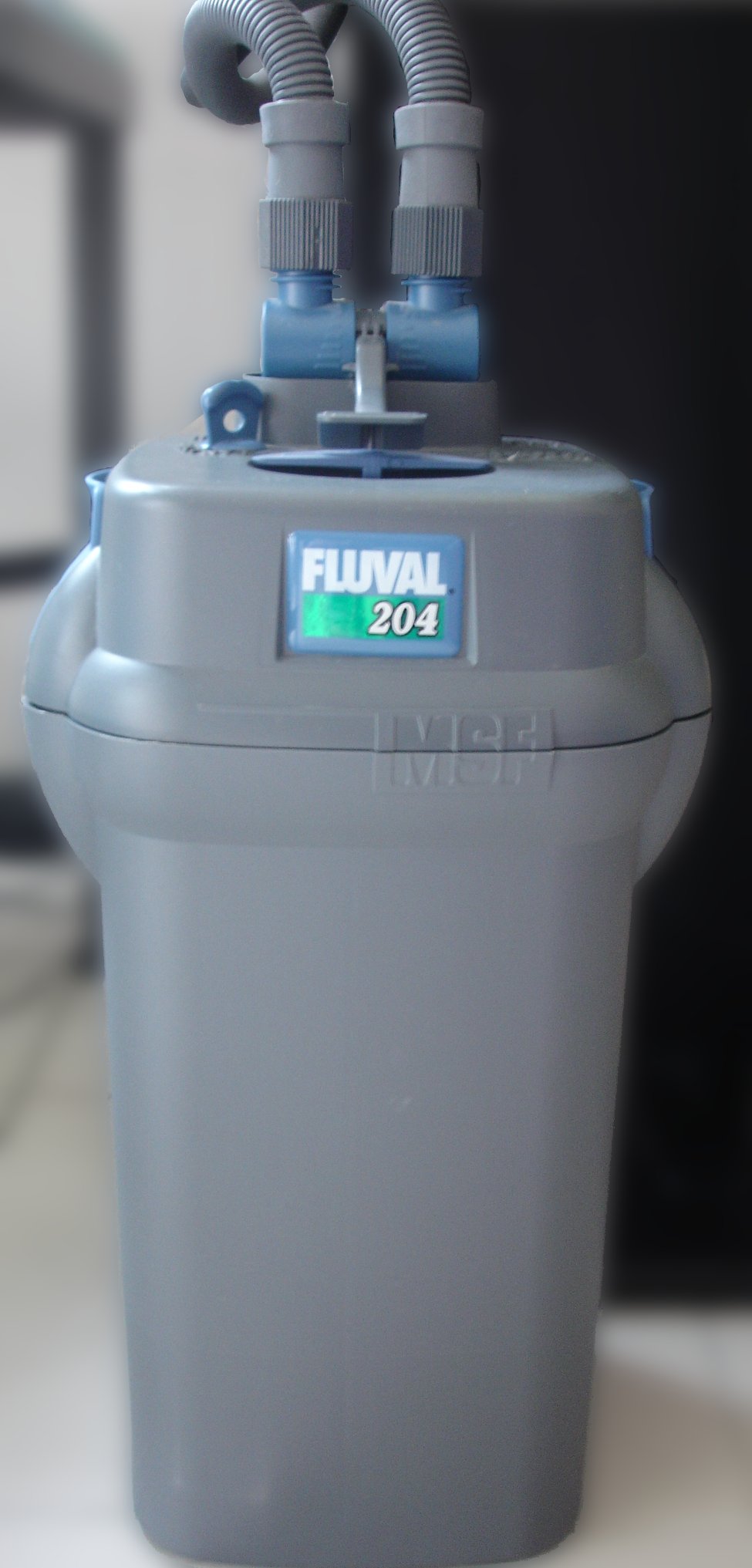
Compared to filters that hang on the back of the aquarium, canister-style external filters offer a greater quantity of filter materials to be used along with a greater degree of flexibility with respect to filter material choice. Water enters the canister filled with the chosen filter material through an intake pipe at the bottom of the canister, passes through the material, and is pumped back to the aquarium through an electric pump on the top of the canister. Benefits of this type of filter is are that they can provide a high volume of filter material without reducing the internal space in the aquarium, and that they can be disconnected from the tank for cleaning/maintenance and replaced without disturbing the aquarium interior or occupants. Disadvantages of canister filters include the increased cost and complexity relative to internal filters and difficulties in cleaning the tubes which transfer water to and from the aquarium.There's also the risk of a leak, which naturally is an issue for any filter placed outside of the aquarium.
Diatom filters
Diatom filters are used only for sporadic cleaning of tanks, they are not continuously operated on aquariums. These filters utilise diatomaceous earth to create an extremely fine filter down to 1 µm which removes particulate matter from the water column.
Trickle filters
See also: Trickling filter
Trickle filters, also known as wet/dry filters are another water filtration systems for marine and freshwater aquariums.This filter comes in two configurations, one which is placed on top of the aquarium (more rarely seen) and one which is placed below the aquarium (more common).
If the wet/dry filter is placed on top of the aquarium, water is pumped over a number of perforated trays containing filter wool or some other filter material. The water trickles through the trays, keeping the filter wool wet but not completely submerged, allowing oxygen-loving bacteria to breed well and aiding biological filtration. The water returns to the aquarium like rain.
Alternatively, the wet/dry filter may be placed below the tank. In this design, water is fed by gravity to the filter below the aquarium. Prefiltered water is delivered to a perforated plate (drip plate). Prefiltering may take place in the aquarium via a foam block or sleeve in the overflow, or weir siphon, or it may be prefiltered by filter wool resting on the perforated plate. The waste laden water from the aquarium spreads over the drip plate, and rains down through a media. This may be a filter wool/plastic grid rolled into a circular shape (DLS or Double Layer Spiral) or any number of plastic media commonly known as Bio Balls. As the water cascades over the media, CO2 is given off, oxygen is picked up, and bacteria convert the waste from the tank into more harmless materials. From here the water enters the sump. The sump may contain a number of compartments, each with its own filtration material. Often, heaters and thermostats are placed in the sump.
Baffle filters
Canister filters
Compared to filters that hang on the back of the aquarium, canister-style external filters offer a greater quantity of filter materials to be used along with a greater degree of flexibility with respect to filter material choice. Water enters the canister filled with the chosen filter material through an intake pipe at the bottom of the canister, passes through the material, and is pumped back to the aquarium through an electric pump on the top of the canister. Benefits of this type of filter is are that they can provide a high volume of filter material without reducing the internal space in the aquarium, and that they can be disconnected from the tank for cleaning/maintenance and replaced without disturbing the aquarium interior or occupants. Disadvantages of canister filters include the increased cost and complexity relative to internal filters and difficulties in cleaning the tubes which transfer water to and from the aquarium.There's also the risk of a leak, which naturally is an issue for any filter placed outside of the aquarium.
Diatom filters
Diatom filters are used only for sporadic cleaning of tanks, they are not continuously operated on aquariums. These filters utilise diatomaceous earth to create an extremely fine filter down to 1 µm which removes particulate matter from the water column.
Trickle filters
See also: Trickling filter
Trickle filters, also known as wet/dry filters are another water filtration systems for marine and freshwater aquariums.This filter comes in two configurations, one which is placed on top of the aquarium (more rarely seen) and one which is placed below the aquarium (more common).
If the wet/dry filter is placed on top of the aquarium, water is pumped over a number of perforated trays containing filter wool or some other filter material. The water trickles through the trays, keeping the filter wool wet but not completely submerged, allowing oxygen-loving bacteria to breed well and aiding biological filtration. The water returns to the aquarium like rain.
Alternatively, the wet/dry filter may be placed below the tank. In this design, water is fed by gravity to the filter below the aquarium. Prefiltered water is delivered to a perforated plate (drip plate). Prefiltering may take place in the aquarium via a foam block or sleeve in the overflow, or weir siphon, or it may be prefiltered by filter wool resting on the perforated plate. The waste laden water from the aquarium spreads over the drip plate, and rains down through a media. This may be a filter wool/plastic grid rolled into a circular shape (DLS or Double Layer Spiral) or any number of plastic media commonly known as Bio Balls. As the water cascades over the media, CO2 is given off, oxygen is picked up, and bacteria convert the waste from the tank into more harmless materials. From here the water enters the sump. The sump may contain a number of compartments, each with its own filtration material. Often, heaters and thermostats are placed in the sump.
Baffle filters
Baffle filters are similar to wet and dry, trickle filters in that they are generally situated below the aquarium. This type of filter consists of a series of baffles that the water must pass through in order to reach the pump which is returning water to the aquarium. These baffles then act, much like a series of canister filters and can be filled with different filter media for different purposes.
Internal filters
Internal filters
Internal filters are, by definition, filters within the confines of the aquarium. These include the sponge filter, variations on the corner filter (pictured top right and left), foam cartridge filter and the undergravel filter. An internal filter may have an electric pump and thus be an internal power filter, often attached to the inside of aquaria via suction cups.
Airlift filters
Sponge filters and corner filters (sometimes called box filters) work by essentially the same mechanism. Both generally work by airlift, using bubbles from an air pump rising in a tube to create flow. In a sponge filter, the inlet may only be covered by a simple open-cell block of foam. A corner filter is slightly more complex. These filters are oftenplaced in the corner on the bottom of the aquarium. Water enters slits in the box, passes through a layer of medium, then exits through the airlift tube to return to the aquarium. These filters tend to only be suitable for small and lightly-stocked aquaria. The sponge filter is especially useful for rearing fry where the sponge prevents the small fish from entering the filter.
Undergravel filters
Airlift filters
Sponge filters and corner filters (sometimes called box filters) work by essentially the same mechanism. Both generally work by airlift, using bubbles from an air pump rising in a tube to create flow. In a sponge filter, the inlet may only be covered by a simple open-cell block of foam. A corner filter is slightly more complex. These filters are oftenplaced in the corner on the bottom of the aquarium. Water enters slits in the box, passes through a layer of medium, then exits through the airlift tube to return to the aquarium. These filters tend to only be suitable for small and lightly-stocked aquaria. The sponge filter is especially useful for rearing fry where the sponge prevents the small fish from entering the filter.
Undergravel filters
Undergravel filters consist of a porous plate which is placed beneath the gravel on the base of the aquarium and one, or more, uplift tubes. Historically, undergravel filters have been driven via air displacement. Air stones are placed at the base of uplift tubes which force water out of the uplift tube creating negative pressure beneath the undergravel filter plate. Water then percolates down through the gravel which itself is the filtration material. Greater flow rate of water through the gravel can be achieved via the use of water pump rather than air displacement.
Beneficial bacteria colonize the gravel bed and provide biological filtration, using the substrate of the aquarium itself as a biological filter.
Undergravel filters can be detrimental to the health of aquatic plants.Fine substrates such as sand or peat may clog an undergravel filter.Undergravel filters are not effective if the substrate bed is uneven. In an uneven gravel bed, water will flow only through the thin portions of the bed, leaving the more heavily covered areas to become anoxic. Because of this, animals that dig, such as cichlids, are best kept in an aquarium using some other type of filtration.
Beneficial bacteria colonize the gravel bed and provide biological filtration, using the substrate of the aquarium itself as a biological filter.
Undergravel filters can be detrimental to the health of aquatic plants.Fine substrates such as sand or peat may clog an undergravel filter.Undergravel filters are not effective if the substrate bed is uneven. In an uneven gravel bed, water will flow only through the thin portions of the bed, leaving the more heavily covered areas to become anoxic. Because of this, animals that dig, such as cichlids, are best kept in an aquarium using some other type of filtration.
Headstone
Use
The stele, as they are called in an archaeological context, is one of the oldest forms of funerary art. Originally, a tombstone was the stone lid of a stone coffin, or the coffin itself, and a gravestone was the stone slab that was laid over a grave. Now all three terms are also used for markers placed at the head of the grave. Originally graves in the 1700s also contained footstones to demarcate the foot end of the grave. Footstones were rarely carved with more than the deceased's initials and year of death, and many cemeteries and churchyards have removed them to make cutting the grass easier. Note however that in many UK cemeteries the principal, and indeed only, marker is placed at the foot of the grave.
Graves and any related memorials are a focus for mourning and remembrance. The names of relatives are often added to a gravestone over the years, so that one marker may chronicle the passing of an entire family spread over decades. Since gravestones and a plot in a cemetery or churchyard cost money, they are also a symbol of wealth or prominence in a community. Some gravestones were even commissioned and erected to their own memory by people who were still living, as a testament to their wealth and status. In a Christian context, the very wealthy often erected elaborate memorials within churches rather than having simply external gravestones.
Crematoria frequently offer similar alternatives for families who do not have a grave to mark, but who want a focus for their mourning and for remembrance. Carved or cast commemorative plaques inside the crematorium for example may serve this purpose.
Materials
The stele, as they are called in an archaeological context, is one of the oldest forms of funerary art. Originally, a tombstone was the stone lid of a stone coffin, or the coffin itself, and a gravestone was the stone slab that was laid over a grave. Now all three terms are also used for markers placed at the head of the grave. Originally graves in the 1700s also contained footstones to demarcate the foot end of the grave. Footstones were rarely carved with more than the deceased's initials and year of death, and many cemeteries and churchyards have removed them to make cutting the grass easier. Note however that in many UK cemeteries the principal, and indeed only, marker is placed at the foot of the grave.
Graves and any related memorials are a focus for mourning and remembrance. The names of relatives are often added to a gravestone over the years, so that one marker may chronicle the passing of an entire family spread over decades. Since gravestones and a plot in a cemetery or churchyard cost money, they are also a symbol of wealth or prominence in a community. Some gravestones were even commissioned and erected to their own memory by people who were still living, as a testament to their wealth and status. In a Christian context, the very wealthy often erected elaborate memorials within churches rather than having simply external gravestones.
Crematoria frequently offer similar alternatives for families who do not have a grave to mark, but who want a focus for their mourning and for remembrance. Carved or cast commemorative plaques inside the crematorium for example may serve this purpose.
Materials
Most types of building materials have been used at some time as markers. The more usual materials include:
Fieldstones. The earliest markers for graves were natural fieldstone, some unmarked and others decorated or incised using a metal awl. Typical motifs for the carving included a symbol and the deceased's name and age.
Granite. Granite is a hard stone and requires skill to carve by hand. Modern methods of carving include using computer-controlled rotary bits and sandblasting over a rubber stencil. Leaving the letters, numbers and emblems exposed on the stone, the blaster can create virtually any kind of artwork or epitaph.
Iron. Iron grave markers and decorations were popular during the Victorian era in the United Kingdom and elsewhere, often being produced by specialist foundries or the local blacksmith. Cast iron headstones have lasted for generations while wrought ironwork often only survives in a rusted or eroded state.
Marble and limestone. Both limestone and marble take carving well. Marble is a recrystallised form of limestone. Both marble and limestone slowly dissolve when exposed to the mild acid in rainwater which can make inscriptions unreadable over time. Marble replaced sandstone as a popular material from the early 1800s.
Sandstone. Sandstone is durable yet soft enough to carve easily. Some sandstone markers are so well preserved that individual chisel marks can be discerned in the carving, while others have delaminated and crumbled into dust. Delamination occurs when moisture gets between the layers that make up the sandstone. As it freezes and expands the layers flake off. In the 1600s sandstone replaced fieldstones in Colonial America.
Slate. Slate can have a pleasing texture but is slightly porous and prone to delamination. It takes lettering well, often highlighted with white paint or gilding.
White Bronze. Actually sand cast zinc, but called white bronze for marketing purposes. Almost all, if not all, zinc grave markers were made by the Monumental Bronze Company of Bridgeport, CT, between 1874 and 1914. They are in cemeteries of the period all across the U. S. and Canada. They were sold as more durable than marble, about 1/3 less expensive and progressive.
Wood. This was a popular material during the Georgian and Victorian era, and almost certainly before, in Great Britain and elsewhere. Some could be very ornate, although few survive beyond 50-100 years due to natural decomposition.
Planting. Trees or shrubs, particularly roses, may be planted, especially to mark the location of ashes. This may be accompanied by a small inscribed metal or wooden marker.
A cemetery may follow national codes of practice or independently prescribe the size and use of certain materials, especially if in a conservation area. Some may limit the placing of a wooden memorial to 6 months after burial, after which a more permanent memorial should be placed. Others may require stones to be of a certain shape or position to facilitate grass-cutting by machines, or hand-held cutters. Cemeteries require regular inspection and maintenance, as stones may settle, topple and, on rare occasions, fall and injure people ; or graves may simply become overgrown and their markers lost or vandalised. Restoration is a specialised job for a monumental mason; even the removal of overgrowth needs care to avoid damaging the carving. For example, ivy should only be cut at the base roots and left to naturally die off, and never pulled off forcefully.
Inscriptions
Fieldstones. The earliest markers for graves were natural fieldstone, some unmarked and others decorated or incised using a metal awl. Typical motifs for the carving included a symbol and the deceased's name and age.
Granite. Granite is a hard stone and requires skill to carve by hand. Modern methods of carving include using computer-controlled rotary bits and sandblasting over a rubber stencil. Leaving the letters, numbers and emblems exposed on the stone, the blaster can create virtually any kind of artwork or epitaph.
Iron. Iron grave markers and decorations were popular during the Victorian era in the United Kingdom and elsewhere, often being produced by specialist foundries or the local blacksmith. Cast iron headstones have lasted for generations while wrought ironwork often only survives in a rusted or eroded state.
Marble and limestone. Both limestone and marble take carving well. Marble is a recrystallised form of limestone. Both marble and limestone slowly dissolve when exposed to the mild acid in rainwater which can make inscriptions unreadable over time. Marble replaced sandstone as a popular material from the early 1800s.
Sandstone. Sandstone is durable yet soft enough to carve easily. Some sandstone markers are so well preserved that individual chisel marks can be discerned in the carving, while others have delaminated and crumbled into dust. Delamination occurs when moisture gets between the layers that make up the sandstone. As it freezes and expands the layers flake off. In the 1600s sandstone replaced fieldstones in Colonial America.
Slate. Slate can have a pleasing texture but is slightly porous and prone to delamination. It takes lettering well, often highlighted with white paint or gilding.
White Bronze. Actually sand cast zinc, but called white bronze for marketing purposes. Almost all, if not all, zinc grave markers were made by the Monumental Bronze Company of Bridgeport, CT, between 1874 and 1914. They are in cemeteries of the period all across the U. S. and Canada. They were sold as more durable than marble, about 1/3 less expensive and progressive.
Wood. This was a popular material during the Georgian and Victorian era, and almost certainly before, in Great Britain and elsewhere. Some could be very ornate, although few survive beyond 50-100 years due to natural decomposition.
Planting. Trees or shrubs, particularly roses, may be planted, especially to mark the location of ashes. This may be accompanied by a small inscribed metal or wooden marker.
A cemetery may follow national codes of practice or independently prescribe the size and use of certain materials, especially if in a conservation area. Some may limit the placing of a wooden memorial to 6 months after burial, after which a more permanent memorial should be placed. Others may require stones to be of a certain shape or position to facilitate grass-cutting by machines, or hand-held cutters. Cemeteries require regular inspection and maintenance, as stones may settle, topple and, on rare occasions, fall and injure people ; or graves may simply become overgrown and their markers lost or vandalised. Restoration is a specialised job for a monumental mason; even the removal of overgrowth needs care to avoid damaging the carving. For example, ivy should only be cut at the base roots and left to naturally die off, and never pulled off forcefully.
Inscriptions
Markers usually bear inscriptions: epitaphs in praise of the deceased or quotations from religious texts. In a few instances the inscription is in the form of a plea, admonishment, testament of faith, claim to fame or even a curse — William Shakespeare's inscription famously declares;
Good friend, for Jesus' sake forbear,
To dig the dust enclosèd here.
Blest be the man that spares these stones,
And cursed be he that moves my bones.
Or a warning about Mortality, such as this Persian poetry carved on an ancient tombstone in the Tajiki capital of Dushanbe.
I heard that mighty Jamshed the King
Carved on a stone near a spring of water these words:
"Many – like us – sat here by this spring
And left this life in the blink of an eye.
We captured the whole world through our courage and strength,
Yet could take nothing with us to our grave."
Or a simpler warning of inevitability of death:
Remember me as you pass by,
As you are now, so once was I,
As I am now, so you will be,
Prepare for death and follow me.
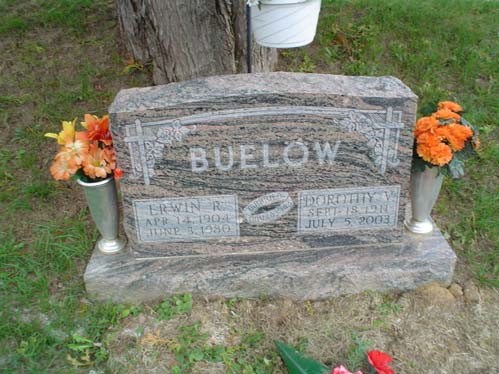
The information on the headstone generally includes the name of the deceased and their date of birth and death. Such information can be useful to genealogists and local historians. Larger cemeteries may require a discrete reference code as well to help accurately fix the location for maintenance. The cemetery owner, church, or, as in the UK, national guidelines might encourage the use of 'tasteful' and accurate wording in inscriptions.
Headstone engravers faced their own "Year 2000 problem" when still-living people, as many as 500,000 the United States alone, pre-purchased headstones with pre-carved death dates beginning 19–.
Bas-relief carvings of a religious nature or of a profile of the deceased can be seen on headstones dating from before the 1800s. Since the invention of photography, a gravestone might include a framed photograph or cameo of the deceased; photographic images or artwork (showing the loved one, or some other image relevant to their life, interests or achievements) are sometimes now engraved onto smooth stone surfaces.
Some headstones use lettering made of white metal fixed into the stone, which is easy to read but can be damaged by ivy or frost. Deep carvings on a hard-wearing stone may weather many centuries exposed in graveyards and still remain legible. Those which are fixed on the inside of churches, on the walls or on the floor (frequently as near to the altar as possible) may last much longer: such memorials were often embellished with a monumental brass.
Good friend, for Jesus' sake forbear,
To dig the dust enclosèd here.
Blest be the man that spares these stones,
And cursed be he that moves my bones.
Or a warning about Mortality, such as this Persian poetry carved on an ancient tombstone in the Tajiki capital of Dushanbe.
I heard that mighty Jamshed the King
Carved on a stone near a spring of water these words:
"Many – like us – sat here by this spring
And left this life in the blink of an eye.
We captured the whole world through our courage and strength,
Yet could take nothing with us to our grave."
Or a simpler warning of inevitability of death:
Remember me as you pass by,
As you are now, so once was I,
As I am now, so you will be,
Prepare for death and follow me.
The information on the headstone generally includes the name of the deceased and their date of birth and death. Such information can be useful to genealogists and local historians. Larger cemeteries may require a discrete reference code as well to help accurately fix the location for maintenance. The cemetery owner, church, or, as in the UK, national guidelines might encourage the use of 'tasteful' and accurate wording in inscriptions.
Headstone engravers faced their own "Year 2000 problem" when still-living people, as many as 500,000 the United States alone, pre-purchased headstones with pre-carved death dates beginning 19–.
Bas-relief carvings of a religious nature or of a profile of the deceased can be seen on headstones dating from before the 1800s. Since the invention of photography, a gravestone might include a framed photograph or cameo of the deceased; photographic images or artwork (showing the loved one, or some other image relevant to their life, interests or achievements) are sometimes now engraved onto smooth stone surfaces.
Some headstones use lettering made of white metal fixed into the stone, which is easy to read but can be damaged by ivy or frost. Deep carvings on a hard-wearing stone may weather many centuries exposed in graveyards and still remain legible. Those which are fixed on the inside of churches, on the walls or on the floor (frequently as near to the altar as possible) may last much longer: such memorials were often embellished with a monumental brass.
Marker inscriptions have also been used for political purposes, such as the grave marker installed in January 2008 at Cave Hill Cemetery in Louisville, Kentucky by Mathew Prescott, an employee of PETA. The grave marker is located near the grave of KFC founder Harland Sanders and bears the acrostic message “KFC tortures birds.” [5] The group placed its grave marker to promote its contention that KFC is cruel to chickens.
Form and decoration
Form and decoration
Gravestones may be simple upright slabs with semi-circular, rounded, gabled, pointed-arched, pedimental, square or other shaped tops. During the 18th century, they were often decorated with memento mori (symbolic reminders of death) such as skulls or winged skulls, winged cherub heads, heavenly crowns, urns or the picks and shovels of the grave digger. Somewhat unusual were more elaborate allegorical figures, such as Old Father Time, or emblems of trade or status, or even some event from the life of the deceased (particularly how they died). Later in the same century, large tomb chests or smaller coped chests were commonly used by the gentry as a means of commemorating a number of members of the same family. In the 19th century, headstone styles became very diverse, ranging from plain to highly decorated. They might be replaced by more elaborately carved markers, such as crosses or angels. Simple curb surrounds, sometimes filled with glass chippings, were popular during the mid-20th century.
Some form of simple decoration is once more popular. Special emblems on tombstones indicate several familiar themes in many faiths. Some examples are:
Anchor - Steadfast hope
Arch - Rejoined with partner in Heaven
Birds - The soul
Book - Faith, wisdom
Cherub - Divine wisdom or justice
Column - Noble life
Broken column - Early death
Conch shell - Wisdom
Cross, anchor and Bible - Trials, victory and reward
Crown - Reward and glory
Dolphin - Salvation, bearer of souls to Heaven
Dove - Purity, love and Holy Spirit
Evergreen - Eternal life
Garland - Victory over death
Gourds - Deliverance from grief
Hands - A relation or partnership (see Reference 3)
Heart - Devotion
Horseshoe - Protection against evil
Hourglass - Time and its swift flight
Ivy - Faithfulness, memory, and undying friendship
Lamb - Innocence
Lamp - Immortality
Laurel - Victory, fame
Lily - Purity and resurrection
Lion - Strength, resurrection
Mermaid - Dualism of Christ - fully God, fully man
Oak - Strength
Olive branch - Forgiveness, and peace
Palms - Martyrdom, or victory over death
Peacock - Eternal life
Pillow - a deathbed, eternal sleep
Poppy - Eternal sleep
Rooster - Awakening, courage and vigilance
Shell - Birth and resurrection
Star of David - The God
Skeleton - Life's brevity
Snake in a circle - Everlasting life in Heaven
Swallow - Motherhood
Broken sword - Life cut short
Crossed swords - Life lost in battle
Torch - Eternal life if upturned, death if extinguished
Tree trunk - The beauty of life
Triangle - Truth, equality and the trinity
Shattered urn - Old age, mourning if draped
Weeping willow - Mourning, grief
Greek letters might also be used:
αω (alpha and omega) - The beginning and the end
χρ (chi rho) - The first letters spelling the name of Christ
IHS - Stylised version of iota-eta-sigma, a Greek abbreviation of Jesus
Safety
Some form of simple decoration is once more popular. Special emblems on tombstones indicate several familiar themes in many faiths. Some examples are:
Anchor - Steadfast hope
Arch - Rejoined with partner in Heaven
Birds - The soul
Book - Faith, wisdom
Cherub - Divine wisdom or justice
Column - Noble life
Broken column - Early death
Conch shell - Wisdom
Cross, anchor and Bible - Trials, victory and reward
Crown - Reward and glory
Dolphin - Salvation, bearer of souls to Heaven
Dove - Purity, love and Holy Spirit
Evergreen - Eternal life
Garland - Victory over death
Gourds - Deliverance from grief
Hands - A relation or partnership (see Reference 3)
Heart - Devotion
Horseshoe - Protection against evil
Hourglass - Time and its swift flight
Ivy - Faithfulness, memory, and undying friendship
Lamb - Innocence
Lamp - Immortality
Laurel - Victory, fame
Lily - Purity and resurrection
Lion - Strength, resurrection
Mermaid - Dualism of Christ - fully God, fully man
Oak - Strength
Olive branch - Forgiveness, and peace
Palms - Martyrdom, or victory over death
Peacock - Eternal life
Pillow - a deathbed, eternal sleep
Poppy - Eternal sleep
Rooster - Awakening, courage and vigilance
Shell - Birth and resurrection
Star of David - The God
Skeleton - Life's brevity
Snake in a circle - Everlasting life in Heaven
Swallow - Motherhood
Broken sword - Life cut short
Crossed swords - Life lost in battle
Torch - Eternal life if upturned, death if extinguished
Tree trunk - The beauty of life
Triangle - Truth, equality and the trinity
Shattered urn - Old age, mourning if draped
Weeping willow - Mourning, grief
Greek letters might also be used:
αω (alpha and omega) - The beginning and the end
χρ (chi rho) - The first letters spelling the name of Christ
IHS - Stylised version of iota-eta-sigma, a Greek abbreviation of Jesus
Safety
Over time a headstone may settle or its fixings weaken. After several instances where unstable stones have fallen in dangerous circumstances, some burial authorities "topple test" headstones by firm pressure to check for stability. They may then tape them off or flatten them.
This procedure has proved controversial in the UK, where an authorities' duty of care to protect visitors is complicated because it often does not have any ownership rights over the potentially dangerous marker. Authorities that have knocked over stones during testing or have unilaterally lifted and laid flat any potentially hazardous stones have been criticised, after grieving relatives have discovered that their relatives' marker has been moved. Since 2007 Consistory Court and local authority guidance now restricts the force used in a topple test and requires an authority to consult relatives before moving a stone. In addition, before laying a stone flat, it must be recorded for posterity.
This procedure has proved controversial in the UK, where an authorities' duty of care to protect visitors is complicated because it often does not have any ownership rights over the potentially dangerous marker. Authorities that have knocked over stones during testing or have unilaterally lifted and laid flat any potentially hazardous stones have been criticised, after grieving relatives have discovered that their relatives' marker has been moved. Since 2007 Consistory Court and local authority guidance now restricts the force used in a topple test and requires an authority to consult relatives before moving a stone. In addition, before laying a stone flat, it must be recorded for posterity.
Microsoft Surface
Overview
Surface is essentially a Windows Vista PC tucked inside a table, topped with a 30-inch reflective surface in a clear acrylic frame. A projector underneath the surface projects an image onto its underside, while five cameras in the machine's housing record reflections of infrared light from human fingertips. The camera can also recognize objects placed on the surface if those objects have specially-designed "tags" applied to them. Users can interact with the machine by touching or dragging their fingertips and objects such as paintbrushes across the screen, or by placing and moving tagged objects. Surface has been optimized to respond to 52 touches at a time. During a demonstration with a reporter, Mark Bolger, the Surface Computing group's marketing director, "dipped" his finger in an on-screen paint palette, then dragged it across the screen to draw a smiley face. Then he used all 10 fingers at once to give the face a full head of hair.
Using the specially-designed "tags" on objects, Microsoft Surface can automatically offer additional wine choices tailored to the dinner being eaten based on the type of wine set on the Surface.
A commercial Microsoft Surface unit is $12,500 (unit only), whereas a developer Microsoft Surface units costs $15,000 and includes a developer unit, five seats and support.However Microsoft said it expects prices to drop enough to make consumer versions feasible in 2010.
Partner companies use the Surface in their hotels, restaurants, and retail stores. The Surface is used to choose meals at restaurants, plan vacations and spots to visit from the hotel room. Starwood Hotels plan to allow users to drop a credit card on the table to pay for music, books, and other amenities offered at the resort. In AT&T stores, use of the Surface include interactive presentations of plans, coverage, and phone features, in addition to dropping two different phones on the table and having the customer be able to view and compare prices, features, and plans. MSNBC's coverage of the 2008 US presidential election used Surface to quickly and easily share with viewers information and analysis of the race leading up to the election. The anchor analyzes polling and election results, views trends and demographic information and explores county maps to determine voting patterns and predict outcomes, all with the flick of his finger. In some hotels and casinos, users can do a range of things such as, watch videos, view maps, order drinks, play games, and chat and flirt with people between Surface tables.
History
The technology behind Surface is called Multi-touch. It has at least a 25-year history,beginning in 1982, with pioneering work being done at the University of Toronto (multi-touch tablets) and Bell Labs (multi-touch screens). The product idea for Surface was initially conceptualized in 2001 by Steven Bathiche of Microsoft Hardware and Andy Wilson of Microsoft Research.In October 2001, a virtual team was formed with Bathiche and Wilson as key members, to bring the idea to the next stage of development.
In 2003, the team presented the idea to the Microsoft Chairman Bill Gates, in a group review. Later, the virtual team was expanded and a prototype nicknamed T1 was produced within a month. The prototype was based on an IKEA table with a hole cut in the top and a sheet of architect vellum used as a diffuser. The team also developed some applications, including pinball, a photo browser and a video puzzle. Over the next year, Microsoft built more than 85 early prototypes for Surface. The final hardware design was completed in 2005.
A similar concept was used in the 2002 science fiction movie Minority Report . As noted in the DVD commentary, the director Steven Spielberg stated the concept of the device came from consultation with Microsoft during the making of the movie. One of the film's technology consultant's associates from MIT later joined Microsoft to work on the Surface project.
Surface was unveiled by Microsoft CEO Steve Ballmer on May 30, 2007 at The Wall Street Journal's 'D: All Things Digital' conference in Carlsbad, California. Surface Computing is part of Microsoft's Productivity and Extended Consumer Experiences Group, which is within the Entertainment & Devices division. The first few companies to deploy Surface will include Harrah's Entertainment, Starwood Hotels & Resorts Worldwide, T-Mobile and a distributor, International Game Technology.
On April 17, 2008 AT&T became the first retail location to launch Surface. In June 2008 Harrah’s Entertainment launched Microsoft Surface at Rio iBar and Disneyland launched it in Tomorrowland, Innoventions Dream Home.
On September 8, 2008 MSNBC began using the Surface to work with election maps for the 2008 US Presidential Election on air. MSNBC's political director, Chuck Todd, was placed at the helm.
Features
Microsoft notes four main components being important in Surface's interface: direct interaction, multi-touch contact, a multi-user experience, and object recognition.
Direct interaction refers to the user's ability to simply reach out and touch the interface of an application in order to interact with it, without the need for a mouse or keyboard. Multi-touch contact refers to the ability to have multiple contact points with an interface, unlike with a mouse, where there is only one cursor. Multi-user is a benefit of multi-touch -- several people can orient themselves on different sides of the surface to interact with an application simultaneously. Object recognition refers to the device's ability to recognize the presence and orientation of tagged objects placed on top of it.
The technology allows non-digital objects to be used as input devices. In one example, a normal paint brush was used to create a digital painting in the software.This is made possible by the fact that, in using cameras for input, the system does not rely on restrictive properties required of conventional touchscreen or touchpad devices such as the capacitance, electrical resistance, or temperature of the tool used (see Touchscreen).
The computer's "vision" is created by a near-infrared, 850-nanometer-wavelength LED light source aimed at the surface. When an object touches the tabletop, the light is reflected to multiple infrared cameras with a net resolution of 1280 x 960, allowing it to sense, and react to items touching the tabletop.
Surface will ship with basic applications, including photos, music, virtual concierge, and games, that can be customized for the customers.
Recently the movie "The Day Earth Stood Still" used Microsoft Surface to display DNA sequence.
A very unique feature/program that comes preinstalled with Microsoft Surface is the pond effect. Simply, it is a "picture" of a stream with leaves and rocks within it (a lot like a screen saver used in xp/vista). By touching the screen, you can create ripples in the "water" just like you were putting your hand into a real stream.
The paint application is somewhat different than in previous Microsoft operating systems. Microsoft Surface can detect a paintbrush and actually project the image of "painting".
Specifications
Surface is a 30-inch (76 cm) display in a table-like form factor, 22 inches (56 cm) high, 21 inches (53 cm) deep, and 42 inches (107 cm) wide. The Surface tabletop is acrylic, and its interior frame is powder-coated steel. The software platform runs on a custom version of Windows Vista and has wired Ethernet 10/100, wireless 802.11 b/g, and Bluetooth 2.0 connectivity. Surface applications are written using either Windows Presentation Foundation or Microsoft XNA technology.
At Microsoft's MSDN Conference, Bill Gates told developers of "Maximum" setup the Microsoft Surface was going to have:
Intel Core Quad Xeon "WoodCrest" @ 2.66GHz
4GB DDR2-1066 RAM
1TB 7200RPM Hard Drive
It has a custom motherboard form factor about the size of two ATX motherboards.
Applications development
Microsoft Surface applications can be written in Windows Presentation Foundation or XNA. The development process is much like normal Vista development, but custom WPF controls had to be created by the Surface team due to the unique interface of Surface. Developers already proficient in WPF can utilize the SDK to write Surface apps for deployments for the large hotels, casinos, and restaurants.
Surface is essentially a Windows Vista PC tucked inside a table, topped with a 30-inch reflective surface in a clear acrylic frame. A projector underneath the surface projects an image onto its underside, while five cameras in the machine's housing record reflections of infrared light from human fingertips. The camera can also recognize objects placed on the surface if those objects have specially-designed "tags" applied to them. Users can interact with the machine by touching or dragging their fingertips and objects such as paintbrushes across the screen, or by placing and moving tagged objects. Surface has been optimized to respond to 52 touches at a time. During a demonstration with a reporter, Mark Bolger, the Surface Computing group's marketing director, "dipped" his finger in an on-screen paint palette, then dragged it across the screen to draw a smiley face. Then he used all 10 fingers at once to give the face a full head of hair.
Using the specially-designed "tags" on objects, Microsoft Surface can automatically offer additional wine choices tailored to the dinner being eaten based on the type of wine set on the Surface.
A commercial Microsoft Surface unit is $12,500 (unit only), whereas a developer Microsoft Surface units costs $15,000 and includes a developer unit, five seats and support.However Microsoft said it expects prices to drop enough to make consumer versions feasible in 2010.
Partner companies use the Surface in their hotels, restaurants, and retail stores. The Surface is used to choose meals at restaurants, plan vacations and spots to visit from the hotel room. Starwood Hotels plan to allow users to drop a credit card on the table to pay for music, books, and other amenities offered at the resort. In AT&T stores, use of the Surface include interactive presentations of plans, coverage, and phone features, in addition to dropping two different phones on the table and having the customer be able to view and compare prices, features, and plans. MSNBC's coverage of the 2008 US presidential election used Surface to quickly and easily share with viewers information and analysis of the race leading up to the election. The anchor analyzes polling and election results, views trends and demographic information and explores county maps to determine voting patterns and predict outcomes, all with the flick of his finger. In some hotels and casinos, users can do a range of things such as, watch videos, view maps, order drinks, play games, and chat and flirt with people between Surface tables.
History
The technology behind Surface is called Multi-touch. It has at least a 25-year history,beginning in 1982, with pioneering work being done at the University of Toronto (multi-touch tablets) and Bell Labs (multi-touch screens). The product idea for Surface was initially conceptualized in 2001 by Steven Bathiche of Microsoft Hardware and Andy Wilson of Microsoft Research.In October 2001, a virtual team was formed with Bathiche and Wilson as key members, to bring the idea to the next stage of development.
In 2003, the team presented the idea to the Microsoft Chairman Bill Gates, in a group review. Later, the virtual team was expanded and a prototype nicknamed T1 was produced within a month. The prototype was based on an IKEA table with a hole cut in the top and a sheet of architect vellum used as a diffuser. The team also developed some applications, including pinball, a photo browser and a video puzzle. Over the next year, Microsoft built more than 85 early prototypes for Surface. The final hardware design was completed in 2005.
A similar concept was used in the 2002 science fiction movie Minority Report . As noted in the DVD commentary, the director Steven Spielberg stated the concept of the device came from consultation with Microsoft during the making of the movie. One of the film's technology consultant's associates from MIT later joined Microsoft to work on the Surface project.
Surface was unveiled by Microsoft CEO Steve Ballmer on May 30, 2007 at The Wall Street Journal's 'D: All Things Digital' conference in Carlsbad, California. Surface Computing is part of Microsoft's Productivity and Extended Consumer Experiences Group, which is within the Entertainment & Devices division. The first few companies to deploy Surface will include Harrah's Entertainment, Starwood Hotels & Resorts Worldwide, T-Mobile and a distributor, International Game Technology.
On April 17, 2008 AT&T became the first retail location to launch Surface. In June 2008 Harrah’s Entertainment launched Microsoft Surface at Rio iBar and Disneyland launched it in Tomorrowland, Innoventions Dream Home.
On September 8, 2008 MSNBC began using the Surface to work with election maps for the 2008 US Presidential Election on air. MSNBC's political director, Chuck Todd, was placed at the helm.
Features
Microsoft notes four main components being important in Surface's interface: direct interaction, multi-touch contact, a multi-user experience, and object recognition.
Direct interaction refers to the user's ability to simply reach out and touch the interface of an application in order to interact with it, without the need for a mouse or keyboard. Multi-touch contact refers to the ability to have multiple contact points with an interface, unlike with a mouse, where there is only one cursor. Multi-user is a benefit of multi-touch -- several people can orient themselves on different sides of the surface to interact with an application simultaneously. Object recognition refers to the device's ability to recognize the presence and orientation of tagged objects placed on top of it.
The technology allows non-digital objects to be used as input devices. In one example, a normal paint brush was used to create a digital painting in the software.This is made possible by the fact that, in using cameras for input, the system does not rely on restrictive properties required of conventional touchscreen or touchpad devices such as the capacitance, electrical resistance, or temperature of the tool used (see Touchscreen).
The computer's "vision" is created by a near-infrared, 850-nanometer-wavelength LED light source aimed at the surface. When an object touches the tabletop, the light is reflected to multiple infrared cameras with a net resolution of 1280 x 960, allowing it to sense, and react to items touching the tabletop.
Surface will ship with basic applications, including photos, music, virtual concierge, and games, that can be customized for the customers.
Recently the movie "The Day Earth Stood Still" used Microsoft Surface to display DNA sequence.
A very unique feature/program that comes preinstalled with Microsoft Surface is the pond effect. Simply, it is a "picture" of a stream with leaves and rocks within it (a lot like a screen saver used in xp/vista). By touching the screen, you can create ripples in the "water" just like you were putting your hand into a real stream.
The paint application is somewhat different than in previous Microsoft operating systems. Microsoft Surface can detect a paintbrush and actually project the image of "painting".
Specifications
Surface is a 30-inch (76 cm) display in a table-like form factor, 22 inches (56 cm) high, 21 inches (53 cm) deep, and 42 inches (107 cm) wide. The Surface tabletop is acrylic, and its interior frame is powder-coated steel. The software platform runs on a custom version of Windows Vista and has wired Ethernet 10/100, wireless 802.11 b/g, and Bluetooth 2.0 connectivity. Surface applications are written using either Windows Presentation Foundation or Microsoft XNA technology.
At Microsoft's MSDN Conference, Bill Gates told developers of "Maximum" setup the Microsoft Surface was going to have:
Intel Core Quad Xeon "WoodCrest" @ 2.66GHz
4GB DDR2-1066 RAM
1TB 7200RPM Hard Drive
It has a custom motherboard form factor about the size of two ATX motherboards.
Applications development
Microsoft Surface applications can be written in Windows Presentation Foundation or XNA. The development process is much like normal Vista development, but custom WPF controls had to be created by the Surface team due to the unique interface of Surface. Developers already proficient in WPF can utilize the SDK to write Surface apps for deployments for the large hotels, casinos, and restaurants.
Ewan MacColl
Early history
MacColl was born James (Jimmie) Henry Miller in Broughton, Salford, Lancashire in England, to Scottish parents, William and Betsy Miller. He left school in 1929, joined the Young Communist League (Britain) and the socialist amateur theatre troupe, the Clarion Players. He began his career as a writer helping produce, and contributing humorous verse and skits to some of the Communist Party's factory papers. He was an activist in the unemployed workers campaigns and the mass trespasses of the early 1930s. One of his best-known songs, "The Manchester Rambler," was written after the pivotal mass trespass of Kinder Scout. He was responsible for publicity in the planning of the trespass.
In 1932 the British counterintelligence service, MI5, opened a file on MacColl, after the Chief Constable of Salford told them that the singer was a Communist Party member. For a time the Special Branch kept a watch on the Manchester home that he shared with his wife Joan Littlewood. MI5 caused some of MacColl's songs to be rejected by the BBC, and blocked the employment of Joan Littlewood as a BBC children's programme presenter.
MacColl enlisted in the British Army in July 1940, but deserted in December. Why he did so, and why he was not prosecuted when he re-surfaced after the war, remain a mystery.
Acting career
In 1931, with other unemployed members of the Clarion Players he formed an agit-prop theatre group, the "Red Megaphones." In 1934 they changed the name to Theatre of Action and not long after were introduced to a young actress recently moved up from London. This was Joan Littlewood who became Miller's wife and work partner.
In 1936, after a failed attempt to relocate to London, the couple returned to Manchester, and formed Theatre Union. In 1940 a performance of The Last Edition - a 'living newspaper' - was halted by the police and Miller and Littlewood were bound over for two years for 'breach of the peace'. The necessities of wartime brought an end to Theatre Union.
In 1946 members of Theatre Union and others formed Theatre Workshop and spent the next few years touring, mostly in the north of England. Jimmie Miller had by then changed his name to Ewan MacColl. In Theatre Union roles had been shared but now, in Theatre Workshop, they were more formalised. Littlewood was the sole producer and MacColl the dramaturge, art director and resident dramatist.
The techniques that had been developed in Theatre Union now were refined, producing the distinctive form of theatre which was the hallmark of Joan Littlewood's Theatre Workshop as the troupe was later known. They were an impoverished travelling troupe, but were making a name for themselves.
Music
In this period MacColl's enthusiasm for folk music grew. In 1953 Theatre Workshop opted to settle in Stratford, London, and MacColl, who was opposed to the move, left and began to concentrate on the promotion and performance of folk music. His long involvement with Topic Records was first obvious in 1950 when he released a single "The Asphalter's Song" on the label.
As well as writing and performing, MacColl followed in the footsteps of his colleague Alan Lomax and collected traditional ballads. Over the years he recorded upwards of a hundred albums, many with English folk song collector and singer A.L. Lloyd. The two together released a series of eight records of the Child Ballads, many of which appeared on his other albums. MacColl also produced a number of LPs with Irish singer songwriter Dominic Behan.
In 1956, MacColl caused a scandal by starting a relationship with Peggy Seeger, who was many years his junior, at the same time as his second wife, the dancer Jean Newlove, the mother of two of his children, Hamish (b. 1950) and Kirsty (b. 1959). It was for Seeger that he wrote the classic, "The First Time Ever I Saw Your Face". The song was written at Seeger's request for a play she was in. He wrote it on the spot and taught it to her over the phone. She was on tour in the USA, but MacColl had been prevented from entering the US due to his Communist past. This song became a #1 hit for Roberta Flack in 1972; MacColl won the Grammy Award for Song of the Year for it, while Flack won the Record of the Year award for it.
In 1959, MacColl began releasing albums on Folkways Records, including several collaborative albums with Peggy Seeger.
His other best-known song is "Dirty Old Town", written about his home town of Salford in Lancashire. It was written to cover an awkward scene change in his play "Landscape with Chimneys" (1949), but with the growing popularity of folk music the song became a standard, part of many a singer's repertoire. Recordings include The Spinners (1964), Roger Whittaker (1968), The Dubliners (1968), Rod Stewart (1969), the Pogues (1985), The Mountain Goats (2002), Simple Minds (2003), Ted Leo and the Pharmacists (2003), and Frank Black (2006).
Among his other songs was "The Ballad of Ho Chi Minh" (1954), which is rather famous in Vietnam. There was also "The Ballad of Tim Evans" (also known as "Go Down You Murderer") about how an innocent man, Timothy Evans, was executed for a crime he did not commit.
Radio
MacColl had been a radio actor since 1933. By the late thirties he was scripting as well. In 1957 producer Charles Parker asked MacColl to collaborate in the creation of a feature programme about the heroic death of train driver John Axon. Normal procedure would have been to use the recorded field interviews only as source for writing the script. MacColl produced a script that incorporated the actual voices and so created a new form that they called the radio ballad.
Between 1957 and 1964, eight of these were broadcast by the BBC, all created by the team of MacColl and Parker together with Peggy Seeger who handled musical direction. MacColl wrote the scripts and the songs, as well as, with the others, collecting the field recordings which were the heart of the productions.
Songwriting
Seeger and MacColl recorded several albums of searing political commentary songs. MacColl himself wrote over 300 songs, some of which have been recorded by artists (in addition to those mentioned above) such as Planxty, The Dubliners, Dick Gaughan, The Clancy Brothers, Elvis Presley, Weddings Parties Anything, and Johnny Cash. In 2001, The Essential Ewan MacColl Songbook was published, which includes the words and music to 200 of his songs.
There is a plaque dedicated to MacColl in Russell Square in London. The inscription includes: "Presented by his communist friends 25.1.1990 ... Folk Laureate - Singer - Dramatist - Marxist ... in recognition of strength and singleness of purpose of this fighter for Peace and Socialism". In 1991 he was awarded a posthumous honorary degree by the University of Salford.
His daughter from his second marriage, Kirsty MacColl, followed him into a musical career, albeit less traditionally. Kirsty MacColl was killed in an accident in Mexico in 2000.
Bibliography
Agit-Prop to Theatre Workshop, Political Playscripts, 1930-1950, edited by Howard Goorney and Ewan MacColl. 1986. ISBN 0-7190-2211-8
Class Act: The Cultural and Political Life of Ewan MacColl by Ben Harker. 2007. ISBN 9780-745-32165-3
Joan's Book: Joan Littlewood's Peculiar History As She Tells It. 1994. ISBN 0-413-77318-3
Journeyman, an Autobiography, by Ewan MacColl. 1990. ISBN 0-283-06036-0
Theatres of the Left, 1880-1935, Workers' Theatre Movements in Britain and America, by Raphael Samuel, Ewan MacColl and Stuart Cosgrove. 1985. ISBN 0-7100-0901-1
Kirsty MacColl, The One and Only, by Karen O'Brien. 2004. ISBN 0-233-00070-4
Discography
Solo albums
Scots Street Songs (1956)
Shuttle and Cage (1957)
Barrack Room Ballads (1958)
Still I Love Him (1958)
Bad Lads and Hard Cases (1959)
Haul on the Bowlin'(1961)
The English and Scottish Popular Ballads (Child Ballads) (1961)
Broadside Ballads, vols 1 and 2 (1962)
Off to Sea Once More (1963)
Four Pence a Day (1963)
British Industrial Folk songs (1963)
Steam Whistle Ballads (1964)
Bundook Ballads (1967)
The Wanton Muse (1968)
Paper Stage 1 (1969)
Paper Stage 2 (1969)
Solo Flight (1972)
Hot Blast (1978)
Daddy, What did You Do The Strike? (1985)
Collaboration - A.L. Lloyd and Ewan MacColl, accompanied by Steve Benbow.
Gamblers and Sporting Blades (E.P.) (1962)
Collaborations - Ewan MacColl and A.L. Lloyd.
Bold Sportsmen All: Gamblers & Sporting Blades (1962)
A Sailor's Garland (1966)
Blow Boys Blow (1967)
Collaboration - A.L. Lloyd, Ewan MacColl, Louis Killen, Ian Campbell, Cyril Tawney, Sam Larner and Harry H. Corbett.
Blow the Man Down (EP) (1956)
Collaboration - A.L. Lloyd and Ewan MacColl.
A Hundred Years Ago (EP) (1956)
The Coast of Peru (EP) (1956)
The Singing Sailor (1956)
The English and Scottish Popular Ballads (The Child Ballads) Vol 1 (1956)
The English and Scottish Popular Ballads (The Child Ballads) Vol 2 (1956)
The English and Scottish Popular Ballads (The Child Ballads) Vol 3 (1956)
The English and Scottish Popular Ballads (The Child Ballads) Vol 4 (1956)
The English and Scottish Popular Ballads (The Child Ballads) Vol 5 (1956)
English and Scottish Folk Ballads (1964)
Collaboration - Bob and Ron Copper, Ewan MacColl, Isla Cameron, Seamus Ennis and Peter Kennedy.
As I Roved Out (1953-4)
Ewan MacColl and Peggy Seeger.
Popular Scottish Songs (1960)
Classic Scots Ballads (1961)
Chorus From The Gallows (1961)
Jacobite Songs - The Two Rebellions 1715 and 1745 (1962)
The Amorous Muse (1966)
The Manchester Angel (1966)
The Angry Muse (1968)
Saturday Night at The Bull and Mouth (1977)
Cold Snap (1977)
Kilroy Was Here
Freeborn Man
Items of News (1986)
Scottish Drinking and Pipe Songs
Naming of Names (1990)
The Jacobite Rebellions
The Long Harvest 1 (1966)
The Long Harvest 2 (1967)
The Long Harvest 3 (1968)
The Long Harvest 4 (1969)
The Long Harvest 5 (1970)
The Long Harvest 6 (1971)
The Long Harvest 7 (1972)
The Long Harvest 8 (1973)
The Long Harvest 9 (1974)
The Long Harvest 10 (1975)
Blood and Roses (1979)
Blood and Roses 2 (1981)
Blood and Roses 3 (1982)
Blood and Roses 4 (1982)
Blood and Roses 5 (1983)
(* Not actually sung by MacColl and Seeger. This is an anthology of songs and tunes recorded by them)
Ewan MacColl/ The Radio Ballads (1958 - 1964)(*).
Ballad of John Axon (1958)
Song of a Road (1959)
Singing The Fishing (1960)
The Big Hewer (1961)
The Body Blow (1962)
On The Edge (1963)
The Fight Game (1964)
The Travelling People (1964)
(* Mixture of documentary, drama and song. Broadcast on BBC radio)
Singles.
Van Dieman's Land/ Lord Randall
Sir Patrick Spens/ Eppie Morrie
Parliamentary Polka/ Song of Choice
Housewife's Alphabet/ My Son
The Shoals of Herring
External links
Ewan MacColl section on Peggy Seeger's website.
Ewan MacColl 1915 - 1989 A Political Journey (From the Working Class Movement Library site)
'Radical' Ewan MacColl was tracked by MI5 for decades, The Independent, March 5, 2006
Folk singer was spied on by MI5, The Sunday Times, March 5, 2006
Why MI5 monitored singer Ewan MacColl, BBC News Online, March 5, 2006
Ewan MacColl/Peggy Seeger discography
'Did You Kiss The Foot That Kicked You?' Ruth Ewan's project with Artangel involving over 100 buskers in London who included 'The Ballad of Accounting' within their repertoire for a week.
MacColl was born James (Jimmie) Henry Miller in Broughton, Salford, Lancashire in England, to Scottish parents, William and Betsy Miller. He left school in 1929, joined the Young Communist League (Britain) and the socialist amateur theatre troupe, the Clarion Players. He began his career as a writer helping produce, and contributing humorous verse and skits to some of the Communist Party's factory papers. He was an activist in the unemployed workers campaigns and the mass trespasses of the early 1930s. One of his best-known songs, "The Manchester Rambler," was written after the pivotal mass trespass of Kinder Scout. He was responsible for publicity in the planning of the trespass.
In 1932 the British counterintelligence service, MI5, opened a file on MacColl, after the Chief Constable of Salford told them that the singer was a Communist Party member. For a time the Special Branch kept a watch on the Manchester home that he shared with his wife Joan Littlewood. MI5 caused some of MacColl's songs to be rejected by the BBC, and blocked the employment of Joan Littlewood as a BBC children's programme presenter.
MacColl enlisted in the British Army in July 1940, but deserted in December. Why he did so, and why he was not prosecuted when he re-surfaced after the war, remain a mystery.
Acting career
In 1931, with other unemployed members of the Clarion Players he formed an agit-prop theatre group, the "Red Megaphones." In 1934 they changed the name to Theatre of Action and not long after were introduced to a young actress recently moved up from London. This was Joan Littlewood who became Miller's wife and work partner.
In 1936, after a failed attempt to relocate to London, the couple returned to Manchester, and formed Theatre Union. In 1940 a performance of The Last Edition - a 'living newspaper' - was halted by the police and Miller and Littlewood were bound over for two years for 'breach of the peace'. The necessities of wartime brought an end to Theatre Union.
In 1946 members of Theatre Union and others formed Theatre Workshop and spent the next few years touring, mostly in the north of England. Jimmie Miller had by then changed his name to Ewan MacColl. In Theatre Union roles had been shared but now, in Theatre Workshop, they were more formalised. Littlewood was the sole producer and MacColl the dramaturge, art director and resident dramatist.
The techniques that had been developed in Theatre Union now were refined, producing the distinctive form of theatre which was the hallmark of Joan Littlewood's Theatre Workshop as the troupe was later known. They were an impoverished travelling troupe, but were making a name for themselves.
Music
In this period MacColl's enthusiasm for folk music grew. In 1953 Theatre Workshop opted to settle in Stratford, London, and MacColl, who was opposed to the move, left and began to concentrate on the promotion and performance of folk music. His long involvement with Topic Records was first obvious in 1950 when he released a single "The Asphalter's Song" on the label.
As well as writing and performing, MacColl followed in the footsteps of his colleague Alan Lomax and collected traditional ballads. Over the years he recorded upwards of a hundred albums, many with English folk song collector and singer A.L. Lloyd. The two together released a series of eight records of the Child Ballads, many of which appeared on his other albums. MacColl also produced a number of LPs with Irish singer songwriter Dominic Behan.
In 1956, MacColl caused a scandal by starting a relationship with Peggy Seeger, who was many years his junior, at the same time as his second wife, the dancer Jean Newlove, the mother of two of his children, Hamish (b. 1950) and Kirsty (b. 1959). It was for Seeger that he wrote the classic, "The First Time Ever I Saw Your Face". The song was written at Seeger's request for a play she was in. He wrote it on the spot and taught it to her over the phone. She was on tour in the USA, but MacColl had been prevented from entering the US due to his Communist past. This song became a #1 hit for Roberta Flack in 1972; MacColl won the Grammy Award for Song of the Year for it, while Flack won the Record of the Year award for it.
In 1959, MacColl began releasing albums on Folkways Records, including several collaborative albums with Peggy Seeger.
His other best-known song is "Dirty Old Town", written about his home town of Salford in Lancashire. It was written to cover an awkward scene change in his play "Landscape with Chimneys" (1949), but with the growing popularity of folk music the song became a standard, part of many a singer's repertoire. Recordings include The Spinners (1964), Roger Whittaker (1968), The Dubliners (1968), Rod Stewart (1969), the Pogues (1985), The Mountain Goats (2002), Simple Minds (2003), Ted Leo and the Pharmacists (2003), and Frank Black (2006).
Among his other songs was "The Ballad of Ho Chi Minh" (1954), which is rather famous in Vietnam. There was also "The Ballad of Tim Evans" (also known as "Go Down You Murderer") about how an innocent man, Timothy Evans, was executed for a crime he did not commit.
Radio
MacColl had been a radio actor since 1933. By the late thirties he was scripting as well. In 1957 producer Charles Parker asked MacColl to collaborate in the creation of a feature programme about the heroic death of train driver John Axon. Normal procedure would have been to use the recorded field interviews only as source for writing the script. MacColl produced a script that incorporated the actual voices and so created a new form that they called the radio ballad.
Between 1957 and 1964, eight of these were broadcast by the BBC, all created by the team of MacColl and Parker together with Peggy Seeger who handled musical direction. MacColl wrote the scripts and the songs, as well as, with the others, collecting the field recordings which were the heart of the productions.
Songwriting
Seeger and MacColl recorded several albums of searing political commentary songs. MacColl himself wrote over 300 songs, some of which have been recorded by artists (in addition to those mentioned above) such as Planxty, The Dubliners, Dick Gaughan, The Clancy Brothers, Elvis Presley, Weddings Parties Anything, and Johnny Cash. In 2001, The Essential Ewan MacColl Songbook was published, which includes the words and music to 200 of his songs.
There is a plaque dedicated to MacColl in Russell Square in London. The inscription includes: "Presented by his communist friends 25.1.1990 ... Folk Laureate - Singer - Dramatist - Marxist ... in recognition of strength and singleness of purpose of this fighter for Peace and Socialism". In 1991 he was awarded a posthumous honorary degree by the University of Salford.
His daughter from his second marriage, Kirsty MacColl, followed him into a musical career, albeit less traditionally. Kirsty MacColl was killed in an accident in Mexico in 2000.
Bibliography
Agit-Prop to Theatre Workshop, Political Playscripts, 1930-1950, edited by Howard Goorney and Ewan MacColl. 1986. ISBN 0-7190-2211-8
Class Act: The Cultural and Political Life of Ewan MacColl by Ben Harker. 2007. ISBN 9780-745-32165-3
Joan's Book: Joan Littlewood's Peculiar History As She Tells It. 1994. ISBN 0-413-77318-3
Journeyman, an Autobiography, by Ewan MacColl. 1990. ISBN 0-283-06036-0
Theatres of the Left, 1880-1935, Workers' Theatre Movements in Britain and America, by Raphael Samuel, Ewan MacColl and Stuart Cosgrove. 1985. ISBN 0-7100-0901-1
Kirsty MacColl, The One and Only, by Karen O'Brien. 2004. ISBN 0-233-00070-4
Discography
Solo albums
Scots Street Songs (1956)
Shuttle and Cage (1957)
Barrack Room Ballads (1958)
Still I Love Him (1958)
Bad Lads and Hard Cases (1959)
Haul on the Bowlin'(1961)
The English and Scottish Popular Ballads (Child Ballads) (1961)
Broadside Ballads, vols 1 and 2 (1962)
Off to Sea Once More (1963)
Four Pence a Day (1963)
British Industrial Folk songs (1963)
Steam Whistle Ballads (1964)
Bundook Ballads (1967)
The Wanton Muse (1968)
Paper Stage 1 (1969)
Paper Stage 2 (1969)
Solo Flight (1972)
Hot Blast (1978)
Daddy, What did You Do The Strike? (1985)
Collaboration - A.L. Lloyd and Ewan MacColl, accompanied by Steve Benbow.
Gamblers and Sporting Blades (E.P.) (1962)
Collaborations - Ewan MacColl and A.L. Lloyd.
Bold Sportsmen All: Gamblers & Sporting Blades (1962)
A Sailor's Garland (1966)
Blow Boys Blow (1967)
Collaboration - A.L. Lloyd, Ewan MacColl, Louis Killen, Ian Campbell, Cyril Tawney, Sam Larner and Harry H. Corbett.
Blow the Man Down (EP) (1956)
Collaboration - A.L. Lloyd and Ewan MacColl.
A Hundred Years Ago (EP) (1956)
The Coast of Peru (EP) (1956)
The Singing Sailor (1956)
The English and Scottish Popular Ballads (The Child Ballads) Vol 1 (1956)
The English and Scottish Popular Ballads (The Child Ballads) Vol 2 (1956)
The English and Scottish Popular Ballads (The Child Ballads) Vol 3 (1956)
The English and Scottish Popular Ballads (The Child Ballads) Vol 4 (1956)
The English and Scottish Popular Ballads (The Child Ballads) Vol 5 (1956)
English and Scottish Folk Ballads (1964)
Collaboration - Bob and Ron Copper, Ewan MacColl, Isla Cameron, Seamus Ennis and Peter Kennedy.
As I Roved Out (1953-4)
Ewan MacColl and Peggy Seeger.
Popular Scottish Songs (1960)
Classic Scots Ballads (1961)
Chorus From The Gallows (1961)
Jacobite Songs - The Two Rebellions 1715 and 1745 (1962)
The Amorous Muse (1966)
The Manchester Angel (1966)
The Angry Muse (1968)
Saturday Night at The Bull and Mouth (1977)
Cold Snap (1977)
Kilroy Was Here
Freeborn Man
Items of News (1986)
Scottish Drinking and Pipe Songs
Naming of Names (1990)
The Jacobite Rebellions
The Long Harvest 1 (1966)
The Long Harvest 2 (1967)
The Long Harvest 3 (1968)
The Long Harvest 4 (1969)
The Long Harvest 5 (1970)
The Long Harvest 6 (1971)
The Long Harvest 7 (1972)
The Long Harvest 8 (1973)
The Long Harvest 9 (1974)
The Long Harvest 10 (1975)
Blood and Roses (1979)
Blood and Roses 2 (1981)
Blood and Roses 3 (1982)
Blood and Roses 4 (1982)
Blood and Roses 5 (1983)
(* Not actually sung by MacColl and Seeger. This is an anthology of songs and tunes recorded by them)
Ewan MacColl/ The Radio Ballads (1958 - 1964)(*).
Ballad of John Axon (1958)
Song of a Road (1959)
Singing The Fishing (1960)
The Big Hewer (1961)
The Body Blow (1962)
On The Edge (1963)
The Fight Game (1964)
The Travelling People (1964)
(* Mixture of documentary, drama and song. Broadcast on BBC radio)
Singles.
Van Dieman's Land/ Lord Randall
Sir Patrick Spens/ Eppie Morrie
Parliamentary Polka/ Song of Choice
Housewife's Alphabet/ My Son
The Shoals of Herring
External links
Ewan MacColl section on Peggy Seeger's website.
Ewan MacColl 1915 - 1989 A Political Journey (From the Working Class Movement Library site)
'Radical' Ewan MacColl was tracked by MI5 for decades, The Independent, March 5, 2006
Folk singer was spied on by MI5, The Sunday Times, March 5, 2006
Why MI5 monitored singer Ewan MacColl, BBC News Online, March 5, 2006
Ewan MacColl/Peggy Seeger discography
'Did You Kiss The Foot That Kicked You?' Ruth Ewan's project with Artangel involving over 100 buskers in London who included 'The Ballad of Accounting' within their repertoire for a week.
Automatic quartz

Mode of operation
A rotating pendulum inside the case is attached to a relatively large gear which meshes with a very small pinion. As the wearer moves, the pendulum turns and spins the pinion at a very high speed - up to 100,000 rpm. This is coupled to a miniature electrical generator which charges a storage device which is a capacitor(s) or a rechargeable battery. A typical full charge will last between two weeks and six months.
Applications
Seiko
Japanese company Seiko pioneered the technique which it unveiled at the Baselworld 1986 under the trial name AGM. The first such watch was released in Germany in January 1988 and April of the same year in Japan (under the name Auto-Quartz). The watches had an average monthly rate of ±15 sec and provided 75 hours of continuous operation when fully powered. Early automatic quartz movements were called AGS (Automatic Generating System); in 1991 the company introduced the Kinetic brand name. Today Seiko offers a wide range of watches with various different Kinetic movements. The top of the line is the caliber 9T82, included in Sportura (international brand) and PROSPEX (only marketed in Japan) Collection. It's sold in limited volume at a price range of about US$3000 which makes it one of the most expensive automatic quartz watches. Kinetic technology has also been used in some of Seiko's Pulsar and Lorus watches. As of 2007, Seiko has sold more than eight million automatic quartz watches.
The different calibres of Kinetic watches currently are relatively large and heavy, weighing in at 1/3rd of a pound (150 grams) or more on many models. Therefore, most Seiko Kinetic watches are only available in a men's size.
Movement calibers
1M20
3M21 3M22
3M62
4M21
4M71
5D22* 5D44* (Direct Drive)
5J21* 5J22* (Auto Relay)
5J32* (Auto Relay)
5M22 5M23 5M25
5M42 5M43 5M45 5M47
5M54* (Retrograde Day Indicator)
5M62* 5M63* 5M65(GMT)*
7D46* 7D48* 7D56* (Auto Relay, Perpetual Calendar)
7L22* (Auto Relay, Chronograph)
7M12 7M42
7M22 7M45
9T82* (Chronograph)
YT57* YT58
(*) In use as of at Aug-2008
Implementation faults
Applications
Seiko
Japanese company Seiko pioneered the technique which it unveiled at the Baselworld 1986 under the trial name AGM. The first such watch was released in Germany in January 1988 and April of the same year in Japan (under the name Auto-Quartz). The watches had an average monthly rate of ±15 sec and provided 75 hours of continuous operation when fully powered. Early automatic quartz movements were called AGS (Automatic Generating System); in 1991 the company introduced the Kinetic brand name. Today Seiko offers a wide range of watches with various different Kinetic movements. The top of the line is the caliber 9T82, included in Sportura (international brand) and PROSPEX (only marketed in Japan) Collection. It's sold in limited volume at a price range of about US$3000 which makes it one of the most expensive automatic quartz watches. Kinetic technology has also been used in some of Seiko's Pulsar and Lorus watches. As of 2007, Seiko has sold more than eight million automatic quartz watches.
The different calibres of Kinetic watches currently are relatively large and heavy, weighing in at 1/3rd of a pound (150 grams) or more on many models. Therefore, most Seiko Kinetic watches are only available in a men's size.
Movement calibers
1M20
3M21 3M22
3M62
4M21
4M71
5D22* 5D44* (Direct Drive)
5J21* 5J22* (Auto Relay)
5J32* (Auto Relay)
5M22 5M23 5M25
5M42 5M43 5M45 5M47
5M54* (Retrograde Day Indicator)
5M62* 5M63* 5M65(GMT)*
7D46* 7D48* 7D56* (Auto Relay, Perpetual Calendar)
7L22* (Auto Relay, Chronograph)
7M12 7M42
7M22 7M45
9T82* (Chronograph)
YT57* YT58
(*) In use as of at Aug-2008
Implementation faults
Some calibers have the backlash phenomenon; tilting the watch from side to side occasionally caused the minute hand to fall around somewhere between half a minute and a full minute. It was confirmed by SEIKO and technically it is impossible to improve the situation by reassembling the watch. This however is apparently completely normal for quartz watches generally. It is more commonly a slight play in the minute hand seen in Seiko quartz movements that amounts to perhaps 1/12th to 1/6th of a visible minute between minute notches on the dial. Arguably, this is not a practical problem and is only noticeable when the case is held motionless and the long hand is watched repeatedly and singlemindedly. Furthermore it only occurs rarely, at least in Seikos with movements manufactured in the last 15 years. Most of the time, the minute marks are hit either dead on, or so close as to hardly be noticeable. Also this does not affect the actual time keeping in the slightest, which is very precise, even by quartz watch standards. As noticed, it appears that any tendency for the long hand to come up short by the same fractional distance is related to the date dial turning at the same time between 2200 and 0000. The amount of actual daily time when this would occur is only about one hour.
Some watches made before year 2000 brought faulty capacitors in the ESU (Electricity Storage Unit). Newer models already bring a new lithium ion rechargeable cell. This cell, sometimes called a secondary battery, enabled the ESU to store more energy for a longer period of time. With the currently made 5M62/5M63/5M65 movements, the result is reserve power for up to six months. An older Kinetic caliber like the 5M42, only runs for two weeks on its reserve power. It also eliminated some capacitor related issues in some Kinetic models in the mid and late 1990s.
Swiss company ETA SA, part of the Swatch group, made seven different automatic quartz movements, calling them Autoquartz. They were part of the premium Flatline series of movements and were sold to a variety of watch vendors, primarily European and American. High grade movements designed to last as long as their premium mechanical movements, they had between 15 to 53 jewels. Unlike most quartz watches, Autoquartz could be calibrated to increase their accuracy. Several vendors had their Autoquartz watches COSC certified. In 2006 to increase production of its highly demanded mechanical movements, Swatch discontinued supplying the Autoquartz line to customers (service and parts are still available). The last actively sold Autoquartz was by Fortis in 2007.
Movement calibers:
204.901 (small 8.75 lignes used primarily in women's watches)
204.911 (replacement for the 204.901 upgrading from a capacitor to a rechargeable battery)
205.111 (discontinued and replaced by the 205.911 which upgraded from a capacitor to a rechargeable battery)
205.711 (15 jeweled movement used only by Swatch Watch for a variety of its fashion watches)
205.911 (the most commonly available movement having 17 jewels and often ordered in gold plating)
205.961 (a 205.911 with the addition of a GMT hand)
206.211 (a 205.911 fitted with a Dubois Depraz 2021 to make a chronograph. With 53 jewels the most jeweled quartz ever made)
Manufacturers who employ or employed ETA movements: Tissot, Longines, Swatch, Omega (Omega Seamaster Omega-matic), Dugena (K-Tech), Wenger (GST Field Terragraph Autoquartz), Hermès (Nomade), Roberge (Altaïr), Mido (Multifort), Bovet (Autoquartz calibre 11BQ01), Fortis (Spacematic Eco), Belair (Autoquartz), HTO (Grand Voyager) and Cyma.
Citizen
Citizen, the second largest Japanese watch company (after Seiko), also built an autoquartz-powered watch: the Citizen Promaster Eco-Duo Drive (released in December of 1998).[3] Novel to this watch was the use of both mechanical power as well as a solar cell. This model was an attempt to enter higher-priced markets (at a cost of around $1000 USD) but the technology failed to attract consumer interest and Citizen has since stopped making use of the unique movement. No other autoquartz powered watch from Citizen is known, all other Eco-Drive models only use solar power or thermal power.
Ventura
Ventura was a small Swiss watch manufacturer claiming to be "the World's only manufacturer of automatic digital watches". Their VEN_99 movement was indeed the only watch combining autoquartz and digital readout of time (LCD) in one package. On offer were three models: the Sparc rx, fx and px. Late 2006, the company was start selling their movement incorporating alarm which made another exclusive feature. All hardware was genuinely designed and exclusively sold by Ventura. In 2007 the company went into bankruptcy.
Critique
As a result of the relatively complex mechanical parts used, Seiko kinetic watches remained to be medium-priced and affordable to the common people and watch enthusiasts. Although the price is way down below the high end Swiss-made luxury watches the time is more precise and excellent among kinetic watches. Swiss watches employ the traditional escapement which is bound to inaccuracy while kinetic watches employ the quartz movement.
Although they are a hybrid of mechanical and electric parts and provide substantial advantages over entirely mechanical watches, the Japanese movements do rarely or never appeal to watch collectors and connoisseurs interested in higher-priced and up-market models which are nearly always mechanical. The Swiss ETA movements, especially those encased by upmarket vendors, have appealed to collectors. This feat of ETA movements caused many counterfeiters to manufacture exactly the same features but of unreliable quality and short lifetime efficacy.
Oil paint

History
The slow-drying properties of organic oils were commonly known to early painters. However, the difficulty in acquiring and working the materials meant that they were rarely used. As public preference for realism increased, however, the quick-drying tempera paints became insufficient. Flemish artists combined tempera and oil painting during the 1400s, but by the 1600s easel painting in pure oils was common, using much the same techniques and materials found today.
The oldest known extant oil paintings date from 650 A.D., found in 2008 in caves in Afghanistan's Bamiyan Valley, "using perhaps walnut and poppy seed drying oils." Though the ancient Mediterranean civilizations of Greece, Rome, and Egypt were familiar with vegetable oils, there is little evidence to indicate their use as media in painting. Indeed, linseed oil was long rejected as a medium because of its tendency to dry slowly, darken, and crack, unlike mastic and wax.
Greek writers such as Aetius Amidenus recorded recipes involving the use of oils for drying, such as walnut, poppy, hempseed, pine nut, castor, and linseed. When thickened, the oils became resinous and could be used as varnish to seal and protect paintings from water. Additionally, when yellow pigment was added to oil, it could be spread over tin foil as a less expensive alternative to gold leaf. Early Christian monks maintained these records and used the techniques in their own artworks. Theophilus Presbyter, a 12th century German monk, recommended linseed oil from the Baltic Sea area, but advocated against the use of olive oil due to its excessively long drying time.
As early as the 13th century, oil was used to add details to tempera paintings. In the 14th century, Cennino Cennini presented a painting technique utilizing tempera painting covered by light layers of oil.
The modern technique of oil painting was created circa 1410 by Jan van Eyck. Though van Eyck was not the first artist to use oil paint, he was the first who is known to have produced a stable siccative oil mixture which could be used to bind mineral pigments. Van Eyck’s mixture probably consisted of piled glass, calcined bones, and mineral pigments boiled in linseed oil until reaching a viscous state.
Antonello da Messina later introduced another improvement to oil paint: he added litharge, or lead (II) oxide, to the mixture. The new mixture had a honey-like consistency and increased siccative properties. This medium was known as oglio cotto—"cooked oil."
Leonardo da Vinci improved the technique even further by cooking the mixture at a low temperature and adding 5 to 10% beeswax, which prevented dramatic darkening of the finished paint. Giorgione, Titian, and Tintoretto each slightly altered this recipe for their own purposes.
During his stay in Italy, Rubens studied the Italian oil paint mixture. He later made his own improvement, using walnut oil warmed with litharge and adding mastic dissolved in turpentine.
Since that time, experiments to improve paint and coatings have been conducted with other oils. Today, oils from bladderpod, sandmat, ironweed, and calendula plants are used to increase resistance or to decrease drying time.
The paint tube was invented in 1841 and artists were liberated from the studio. Artists no longer needed to grind each pigment by hand and carefully mix the binding oil in the proper proportions. Paints were made in bulk and sold in tin tubes with a cap. The cap could be replaced and the paints preserved for future use. The manufactured paints had a balanced consistency that the artist could thin with turpentine if he chose. Artists were no longer bound to the studio. They could work outside in direct sunlight, misty fog, at dawn or twilight. Paint in tubes also changed the way artists applied paint to the canvas. Painting became much more spontaneous. Artists were no longer obliged to paint in careful layers of thinned pigments and varnish, although they could use that time-tested method if they chose. With paint in tubes, a greater variety of techniques could be employed, such as blending the paint on the canvas and painting directly on the raw, ungessoed surface. The effect of paint in tubes was so important that it contributed to the rise of the impressionist style. The artist Renoir said, “Without tubes of paint, there would have been no impressionism.” Thanks to the mobility that paint in tubes provided, artists could capture the light of a fleeting moment of the day, and the impressions that it provided.
Practical properties of oil paint
Many artists today consider oil paint to be one of the fundamental art media; something that a student should learn to appreciate, because of its properties and use in previous, very popular artwork. Typical qualities of oil paint include a long "open time," which means that the paint does not dry quickly. Oil paints will not dry for up to several weeks, allowing the artist to work on a painting for several sessions. Oil paint also has a propensity to blend into surrounding paint allowing very subtle blending of colors. This medium also produced vivid color with a natural sheen and distinct contrast. Oil paints have a surface translucency similar to human skin, making it an ideal medium for portraits,
Carrier
Traditional oil paints require an oil that will gradually harden, forming a stable, impermeable film. Such oils are called siccative, or drying, oils, and are characterized by high levels of polyunsaturated fatty acids. One common measure of the siccative property of oils is iodine number, the number of grams of iodine one hundred grams of oil can absorb. Oils with an iodine number greater than 130 are considered drying, those with an iodine number of 115-130 are semi-drying, and those with an iodine number of less than 115 are non-drying. Linseed oil, the most prevalent vehicle for artists' oil paints, is a drying oil.
When exposed to air, oils do not undergo the same evaporative process that water does. Instead, they oxidize into a dry solid. Depending upon the source, this process can be very slow, resulting in paints with an extended drying time.
This earliest and still most commonly used vehicle is linseed oil, pressed from the seed of the flax plant. Modern processes use heat or steam in order to produce refined varieties of oil, which contain fewer impurities, but cold-pressed oils are still the favorite of many artists. Other vegetable oils such as Hemp, poppy seed, walnut, sunflower, safflower, and soybean oils may be used as alternatives to linseed oil for a variety of reasons. For example, safflower and poppy oils are paler than linseed oil and allow for more vibrant whites.
Once the oil is extracted additives are sometimes used to improve its chemical properties. In this way the paint can be made to dry more quickly if that is desired, or to have varying levels of gloss. Modern oils paints can, therefore, have complex chemical structures; for example, affecting resistance to UV or giving a suede like appearance.
Non-oil carriers
New carriers for paint were developed out of organic polymer technology in the twentieth century. In many cases, such as acrylic paint, a different binder is substituted for oil. These new binders have different properties than oil paint, such as faster drying times and increased mechanical strength of the paint film. They require different (though overlapping) techniques and provide new possibilities that are not available to oil painters, such as the building of heavy texture and impasto, the use of collage, and the sculpting of the paint surface. Contemporary thinking therefore recognizes the new materials as separate mediums.
Some manufacturers, in an attempt to produce a medium that is oil-based but avoids toxic cleaners and thinners, have managed to produce water miscible oil paints. The vehicle for such paints is an oil with a surfactant molecule chemically bonded to it which allows oil to mix with water in much the same way dish soap does, but with greater sophistication.
How oil paint dries
Unlike water-based paints, oils do not dry by evaporation. The drying of oils is the result of an oxidative reaction, chemically equivalent to slow, flameless combustion. In this process, a form of autoxidation, oxygen attacks the hydrocarbon chain, touching off a series of addition reactions. As a result, the oil polymerizes, forming long, chain-like molecules. Following the autoxidation stage, the oil polymers cross-link: bonds form between neighboring molecules, resulting in a vast polymer network. Over time, this network may undergo further change. Certain functional groups in the networks become ionized, and the network transitions from a system held together by nonpolar covalent bonds to one governed by the ionic forces between these functional groups and the metal ions present in the pigment.
Vegetable oils consist of glycerol esters of fatty acids, long hydrocarbon chains with a terminal carboxyl group. In oil autoxidation, oxygen attacks a hydrocarbon chain, often at the site of an allylic hydrogen (a hydrogen on a carbon atom adjacent to a double bond). This produces a free radical, a substance with an unpaired electron which makes it highly reactive. A series of addition reactions ensues. Each step produces additional free radicals, which then engage in further polymerization. The process finally terminates when free radicals collide, combining their unpaired electrons to form a new bond. The polymerization stage occurs over a period of days to weeks, and renders the film dry to the touch. However, chemical changes in the paint film continue.
As time passes, the polymer chains begin to cross-link. Adjacent molecules form covalent bonds, forming a molecular network that extends throughout the painting. In this network, known as the stationary phase, molecules are no longer free to slide past each other, or to move apart. The result is a stable film which, while somewhat elastic, does not flow or deform under the pull of gravity.
During the drying process, a number of compounds are produced that do not contribute to the polymer network. These include unstable hydroperoxides (ROOH), the major by-product of the reaction of oxygen with unsaturated fatty acids. The hydroperoxides quickly decompose, forming carbon dioxide and water, as well as a variety of aldehydes, acids, and hydrocarbons. Many of these compounds are volatile, and in an unpigmented oil, they would be quickly lost to the environment. However, in paints, such volatiles may react with lead, zinc, copper or iron compounds in the pigment, and remain in the paint film as coordination complexes or salts. A large number of free fatty acids are also produced during autoxidation, as most of the original ester bonds in the triglycerides undergo hydrolysis. Some portion of the free fatty acids react with metals in the pigment, producing metal carboxylates. Together, the various non-cross-linking substances associated with the polymer network constitute the mobile phases. Unlike the molecules that are part of the network itself, they are capable of moving and diffusing within the film, and can be removed using heat or a solvent. The mobile phase may play a role in plasticizing the paint film, preventing it from becoming too brittle.
One simple technique for monitoring the early stages of the drying process is to measure weight change in an oil film over time. Initially, the film becomes heavier, as it absorbs large amounts of oxygen. Then oxygen uptake ceases, and the weight of the film declines as volatile compounds are lost to the environment.
As the paint film ages, a further transition occurs. Carboxyl groups in the polymers of the stationary phase lose a hydrogen ion, becoming negatively charged, and form complexes with metal cations present in the pigment. The original network, with its nonpolar, covalent bonds is replaced by an ionomeric structure, held together by ionic interactions. At present, the structure of these ionomeric networks is not well understood.
Pigment
The color of oil paint derives from the small particles mixed with the carrier. Common pigment types include mineral salts such as white oxides: lead, now most often replaced by less toxic zinc and titanium, and the red to yellow cadmium pigments. Another class consists of earth types, e.g. sienna or umber. Synthetic pigments are also now available. Natural pigments have the advantage of being well understood through centuries of use but synthetics have greatly increased the spectrum available, and many are tested well for their lightfastness.
Toxicity
Many of the historical pigments were dangerous. Many toxic pigments, such as emerald green (copper(II)-acetoarsenite) and orpiment (arsenic sulfide), to name only two, have fallen from use. Some pigments still in use are toxic to some degree, however. Many of the reds and yellows are produced using cadmium, and vermilion red uses natural or synthetic mercuric sulfide or cinnabar. Flake white and Cremnitz white are made with basic lead carbonate. The cobalt colors, including cobalt blue and cerulean blue, are made with cobalt compounds. Some varieties of cobalt violet are made with cobalt arsenate. Manufacturers advise that care should be taken when using paints with these pigments. They advise never to spray apply toxic paints. Read the health warnings on the label. Some artists choose to avoid toxic pigments entirely, while others find that the unique properties of the paints more than compensate for the small risks inherent in using them.
Zinc white and titanium white may carry a California health label for lead content. Those paints contain far less lead than the lead whites. Some manufacturers put the text "California only" above the warning.
Thinners such as turpentine and white spirit are flammable. Some of them, particularly the poor grades of turpentine, have a strong odor. Both turpentine and odorless mineral spirits can be harmful to the health if used inappropriately. Thinners made from D-limonene are thought by some to have some potential for risk. The EPA has not made that determination, however.
Generally speaking, these risks are minor if the materials are used as intended. Solvents can be made safer by painting in a well-ventilated area, and paint is likely only dangerous in the hands of small children.
The slow-drying properties of organic oils were commonly known to early painters. However, the difficulty in acquiring and working the materials meant that they were rarely used. As public preference for realism increased, however, the quick-drying tempera paints became insufficient. Flemish artists combined tempera and oil painting during the 1400s, but by the 1600s easel painting in pure oils was common, using much the same techniques and materials found today.
The oldest known extant oil paintings date from 650 A.D., found in 2008 in caves in Afghanistan's Bamiyan Valley, "using perhaps walnut and poppy seed drying oils." Though the ancient Mediterranean civilizations of Greece, Rome, and Egypt were familiar with vegetable oils, there is little evidence to indicate their use as media in painting. Indeed, linseed oil was long rejected as a medium because of its tendency to dry slowly, darken, and crack, unlike mastic and wax.
Greek writers such as Aetius Amidenus recorded recipes involving the use of oils for drying, such as walnut, poppy, hempseed, pine nut, castor, and linseed. When thickened, the oils became resinous and could be used as varnish to seal and protect paintings from water. Additionally, when yellow pigment was added to oil, it could be spread over tin foil as a less expensive alternative to gold leaf. Early Christian monks maintained these records and used the techniques in their own artworks. Theophilus Presbyter, a 12th century German monk, recommended linseed oil from the Baltic Sea area, but advocated against the use of olive oil due to its excessively long drying time.
As early as the 13th century, oil was used to add details to tempera paintings. In the 14th century, Cennino Cennini presented a painting technique utilizing tempera painting covered by light layers of oil.
The modern technique of oil painting was created circa 1410 by Jan van Eyck. Though van Eyck was not the first artist to use oil paint, he was the first who is known to have produced a stable siccative oil mixture which could be used to bind mineral pigments. Van Eyck’s mixture probably consisted of piled glass, calcined bones, and mineral pigments boiled in linseed oil until reaching a viscous state.
Antonello da Messina later introduced another improvement to oil paint: he added litharge, or lead (II) oxide, to the mixture. The new mixture had a honey-like consistency and increased siccative properties. This medium was known as oglio cotto—"cooked oil."
Leonardo da Vinci improved the technique even further by cooking the mixture at a low temperature and adding 5 to 10% beeswax, which prevented dramatic darkening of the finished paint. Giorgione, Titian, and Tintoretto each slightly altered this recipe for their own purposes.
During his stay in Italy, Rubens studied the Italian oil paint mixture. He later made his own improvement, using walnut oil warmed with litharge and adding mastic dissolved in turpentine.
Since that time, experiments to improve paint and coatings have been conducted with other oils. Today, oils from bladderpod, sandmat, ironweed, and calendula plants are used to increase resistance or to decrease drying time.
The paint tube was invented in 1841 and artists were liberated from the studio. Artists no longer needed to grind each pigment by hand and carefully mix the binding oil in the proper proportions. Paints were made in bulk and sold in tin tubes with a cap. The cap could be replaced and the paints preserved for future use. The manufactured paints had a balanced consistency that the artist could thin with turpentine if he chose. Artists were no longer bound to the studio. They could work outside in direct sunlight, misty fog, at dawn or twilight. Paint in tubes also changed the way artists applied paint to the canvas. Painting became much more spontaneous. Artists were no longer obliged to paint in careful layers of thinned pigments and varnish, although they could use that time-tested method if they chose. With paint in tubes, a greater variety of techniques could be employed, such as blending the paint on the canvas and painting directly on the raw, ungessoed surface. The effect of paint in tubes was so important that it contributed to the rise of the impressionist style. The artist Renoir said, “Without tubes of paint, there would have been no impressionism.” Thanks to the mobility that paint in tubes provided, artists could capture the light of a fleeting moment of the day, and the impressions that it provided.
Practical properties of oil paint
Many artists today consider oil paint to be one of the fundamental art media; something that a student should learn to appreciate, because of its properties and use in previous, very popular artwork. Typical qualities of oil paint include a long "open time," which means that the paint does not dry quickly. Oil paints will not dry for up to several weeks, allowing the artist to work on a painting for several sessions. Oil paint also has a propensity to blend into surrounding paint allowing very subtle blending of colors. This medium also produced vivid color with a natural sheen and distinct contrast. Oil paints have a surface translucency similar to human skin, making it an ideal medium for portraits,
Carrier
Traditional oil paints require an oil that will gradually harden, forming a stable, impermeable film. Such oils are called siccative, or drying, oils, and are characterized by high levels of polyunsaturated fatty acids. One common measure of the siccative property of oils is iodine number, the number of grams of iodine one hundred grams of oil can absorb. Oils with an iodine number greater than 130 are considered drying, those with an iodine number of 115-130 are semi-drying, and those with an iodine number of less than 115 are non-drying. Linseed oil, the most prevalent vehicle for artists' oil paints, is a drying oil.
When exposed to air, oils do not undergo the same evaporative process that water does. Instead, they oxidize into a dry solid. Depending upon the source, this process can be very slow, resulting in paints with an extended drying time.
This earliest and still most commonly used vehicle is linseed oil, pressed from the seed of the flax plant. Modern processes use heat or steam in order to produce refined varieties of oil, which contain fewer impurities, but cold-pressed oils are still the favorite of many artists. Other vegetable oils such as Hemp, poppy seed, walnut, sunflower, safflower, and soybean oils may be used as alternatives to linseed oil for a variety of reasons. For example, safflower and poppy oils are paler than linseed oil and allow for more vibrant whites.
Once the oil is extracted additives are sometimes used to improve its chemical properties. In this way the paint can be made to dry more quickly if that is desired, or to have varying levels of gloss. Modern oils paints can, therefore, have complex chemical structures; for example, affecting resistance to UV or giving a suede like appearance.
Non-oil carriers
New carriers for paint were developed out of organic polymer technology in the twentieth century. In many cases, such as acrylic paint, a different binder is substituted for oil. These new binders have different properties than oil paint, such as faster drying times and increased mechanical strength of the paint film. They require different (though overlapping) techniques and provide new possibilities that are not available to oil painters, such as the building of heavy texture and impasto, the use of collage, and the sculpting of the paint surface. Contemporary thinking therefore recognizes the new materials as separate mediums.
Some manufacturers, in an attempt to produce a medium that is oil-based but avoids toxic cleaners and thinners, have managed to produce water miscible oil paints. The vehicle for such paints is an oil with a surfactant molecule chemically bonded to it which allows oil to mix with water in much the same way dish soap does, but with greater sophistication.
How oil paint dries
Unlike water-based paints, oils do not dry by evaporation. The drying of oils is the result of an oxidative reaction, chemically equivalent to slow, flameless combustion. In this process, a form of autoxidation, oxygen attacks the hydrocarbon chain, touching off a series of addition reactions. As a result, the oil polymerizes, forming long, chain-like molecules. Following the autoxidation stage, the oil polymers cross-link: bonds form between neighboring molecules, resulting in a vast polymer network. Over time, this network may undergo further change. Certain functional groups in the networks become ionized, and the network transitions from a system held together by nonpolar covalent bonds to one governed by the ionic forces between these functional groups and the metal ions present in the pigment.
Vegetable oils consist of glycerol esters of fatty acids, long hydrocarbon chains with a terminal carboxyl group. In oil autoxidation, oxygen attacks a hydrocarbon chain, often at the site of an allylic hydrogen (a hydrogen on a carbon atom adjacent to a double bond). This produces a free radical, a substance with an unpaired electron which makes it highly reactive. A series of addition reactions ensues. Each step produces additional free radicals, which then engage in further polymerization. The process finally terminates when free radicals collide, combining their unpaired electrons to form a new bond. The polymerization stage occurs over a period of days to weeks, and renders the film dry to the touch. However, chemical changes in the paint film continue.
As time passes, the polymer chains begin to cross-link. Adjacent molecules form covalent bonds, forming a molecular network that extends throughout the painting. In this network, known as the stationary phase, molecules are no longer free to slide past each other, or to move apart. The result is a stable film which, while somewhat elastic, does not flow or deform under the pull of gravity.
During the drying process, a number of compounds are produced that do not contribute to the polymer network. These include unstable hydroperoxides (ROOH), the major by-product of the reaction of oxygen with unsaturated fatty acids. The hydroperoxides quickly decompose, forming carbon dioxide and water, as well as a variety of aldehydes, acids, and hydrocarbons. Many of these compounds are volatile, and in an unpigmented oil, they would be quickly lost to the environment. However, in paints, such volatiles may react with lead, zinc, copper or iron compounds in the pigment, and remain in the paint film as coordination complexes or salts. A large number of free fatty acids are also produced during autoxidation, as most of the original ester bonds in the triglycerides undergo hydrolysis. Some portion of the free fatty acids react with metals in the pigment, producing metal carboxylates. Together, the various non-cross-linking substances associated with the polymer network constitute the mobile phases. Unlike the molecules that are part of the network itself, they are capable of moving and diffusing within the film, and can be removed using heat or a solvent. The mobile phase may play a role in plasticizing the paint film, preventing it from becoming too brittle.
One simple technique for monitoring the early stages of the drying process is to measure weight change in an oil film over time. Initially, the film becomes heavier, as it absorbs large amounts of oxygen. Then oxygen uptake ceases, and the weight of the film declines as volatile compounds are lost to the environment.
As the paint film ages, a further transition occurs. Carboxyl groups in the polymers of the stationary phase lose a hydrogen ion, becoming negatively charged, and form complexes with metal cations present in the pigment. The original network, with its nonpolar, covalent bonds is replaced by an ionomeric structure, held together by ionic interactions. At present, the structure of these ionomeric networks is not well understood.
Pigment
The color of oil paint derives from the small particles mixed with the carrier. Common pigment types include mineral salts such as white oxides: lead, now most often replaced by less toxic zinc and titanium, and the red to yellow cadmium pigments. Another class consists of earth types, e.g. sienna or umber. Synthetic pigments are also now available. Natural pigments have the advantage of being well understood through centuries of use but synthetics have greatly increased the spectrum available, and many are tested well for their lightfastness.
Toxicity
Many of the historical pigments were dangerous. Many toxic pigments, such as emerald green (copper(II)-acetoarsenite) and orpiment (arsenic sulfide), to name only two, have fallen from use. Some pigments still in use are toxic to some degree, however. Many of the reds and yellows are produced using cadmium, and vermilion red uses natural or synthetic mercuric sulfide or cinnabar. Flake white and Cremnitz white are made with basic lead carbonate. The cobalt colors, including cobalt blue and cerulean blue, are made with cobalt compounds. Some varieties of cobalt violet are made with cobalt arsenate. Manufacturers advise that care should be taken when using paints with these pigments. They advise never to spray apply toxic paints. Read the health warnings on the label. Some artists choose to avoid toxic pigments entirely, while others find that the unique properties of the paints more than compensate for the small risks inherent in using them.
Zinc white and titanium white may carry a California health label for lead content. Those paints contain far less lead than the lead whites. Some manufacturers put the text "California only" above the warning.
Thinners such as turpentine and white spirit are flammable. Some of them, particularly the poor grades of turpentine, have a strong odor. Both turpentine and odorless mineral spirits can be harmful to the health if used inappropriately. Thinners made from D-limonene are thought by some to have some potential for risk. The EPA has not made that determination, however.
Generally speaking, these risks are minor if the materials are used as intended. Solvents can be made safer by painting in a well-ventilated area, and paint is likely only dangerous in the hands of small children.
订阅:
博文 (Atom)